
ABC Mais Telecom Library
Professional radio communication, explained clearly
Practical guides to compare two-way radios, plan rentals and understand coverage, licensing and technical service in Brazil.
Questions that help you decide
Technical answers for comparing, testing and planning with greater confidence.

Radio rental for 1 km or 5 km: how to test coverage
Advertised distance does not guarantee communication. See how to test radio to radio, evaluate obstacles, and decide whether the rental needs a repeater or PoC.
Does a two-way radio need an Anatel licence? Understand the cases
See Anatel's 26 general-use channels, the 500 mW and 12,5 kHz limits, and when the authorisation exemption does not apply to professional radios.
Two-way radio servicing: from symptom to diagnosis
Audio, battery, coverage or charging problems? Learn what to record, what not to attempt yourself and how a technical assessment works.
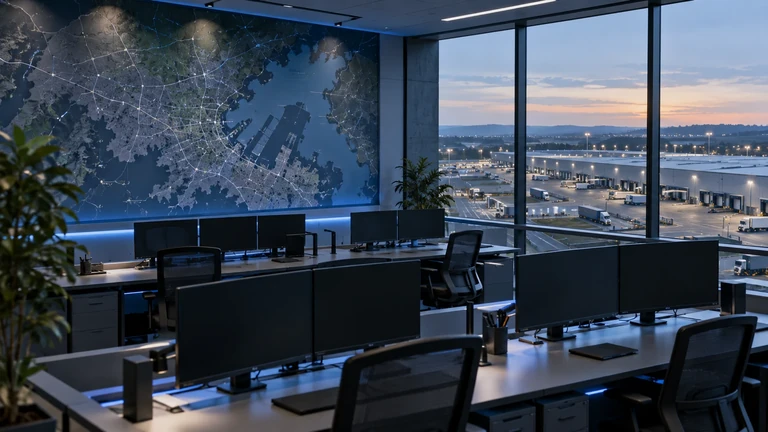
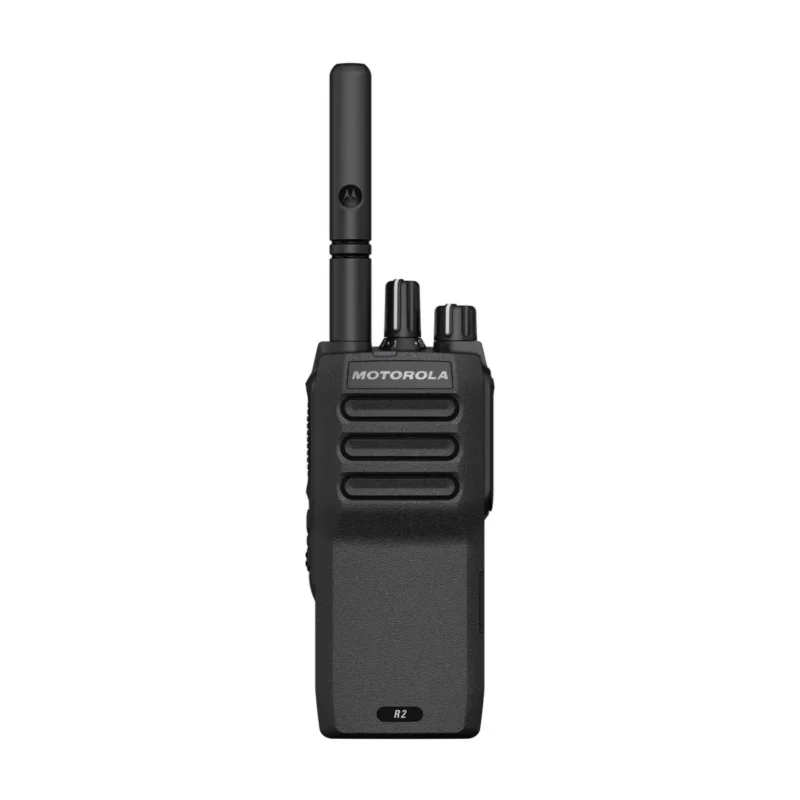
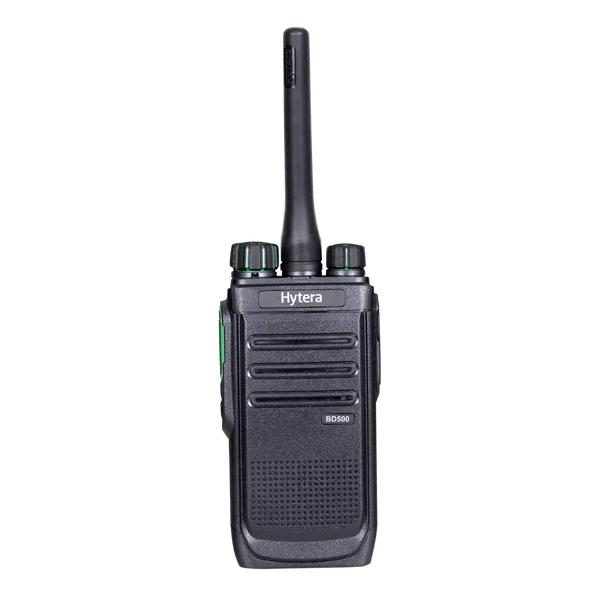
Motorola or Hytera: how to choose a two-way radio for your company
Compare operating requirements, coverage, accessories and support before choosing Motorola Solutions or Hytera. ABC catalog models and practical testing criteria.
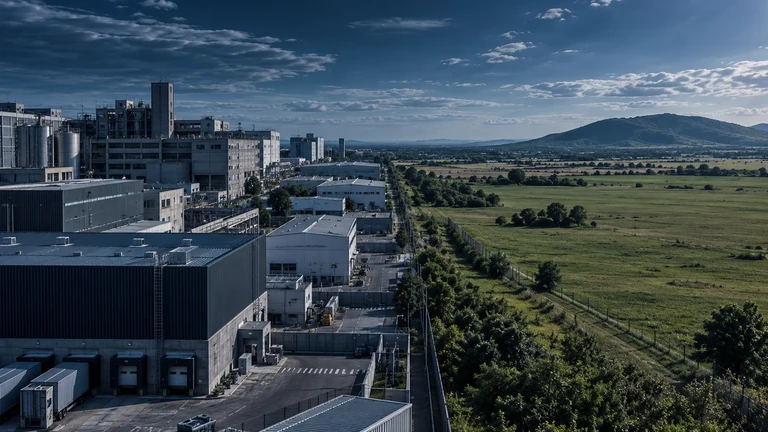
UHF or VHF: which band to choose for radiocommunication?
UHF and VHF are not chosen by a universal range rule. Compare environment, antennas, frequency authorisation, and field testing.

UHF, VHF, digital, LTE, repeater and body camera: practical guide
Understand UHF, VHF, analog, digital, LTE, repeater and online or offline body camera in three practical decisions.
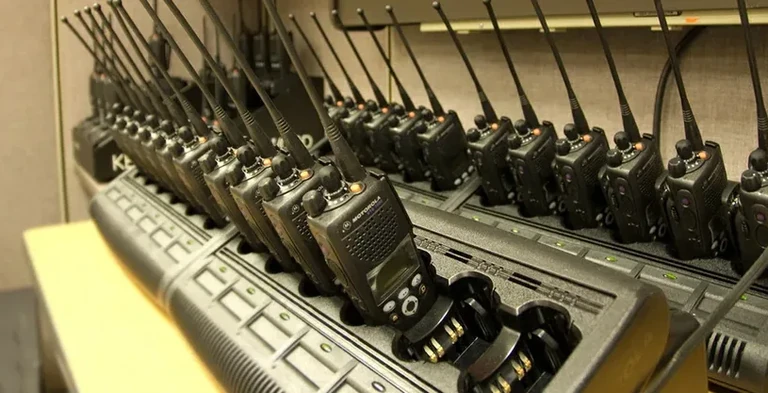
Radio rental: benefits for the operation
From simple radio rental for events to composition with body camera and repeater: see the role of each resource and the necessary field tests.
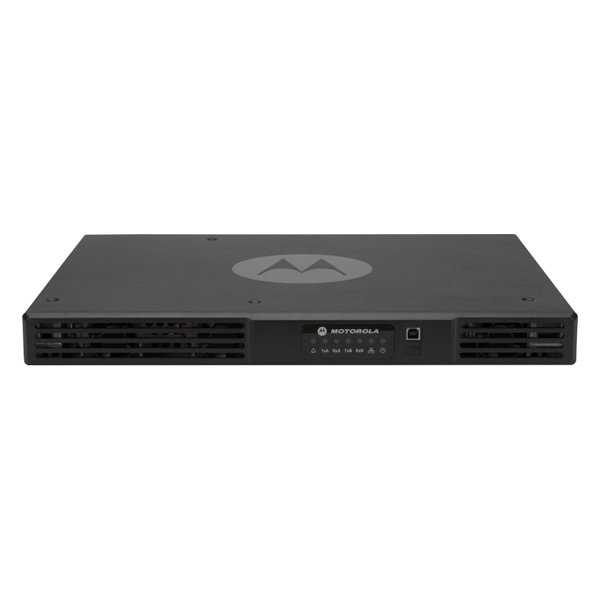
Two-way radio repeater rental: when does your operation need to expand coverage?
When to rent a repeater, how to test coverage, and under what conditions analog radios, DMR from different brands, or PoC can integrate into the project.
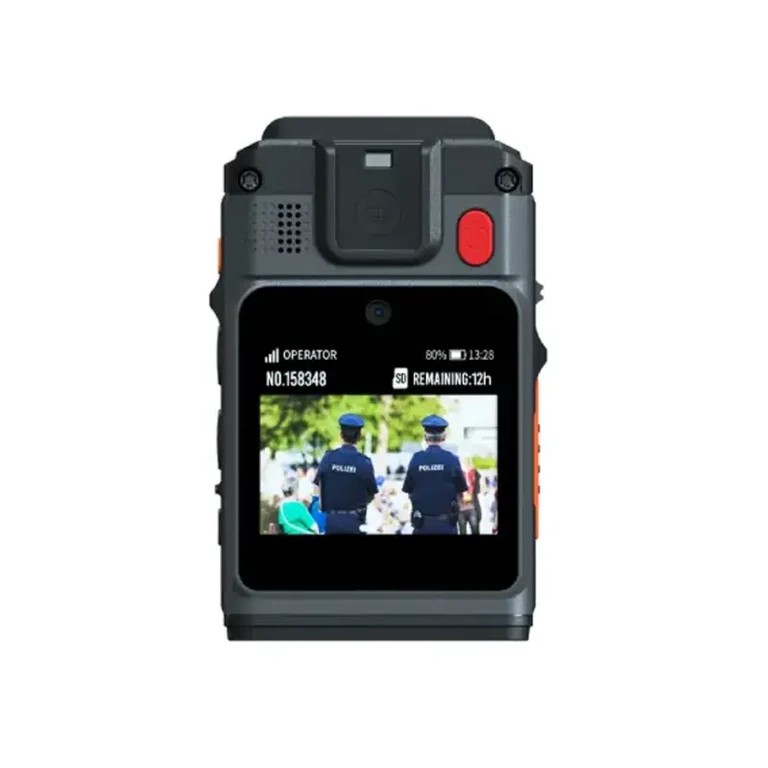
Body camera rental: benefits and operation planning
Understand how to plan body camera rental: recording, live transmission, shift changes, and management of records with ABC Mais Telecom.
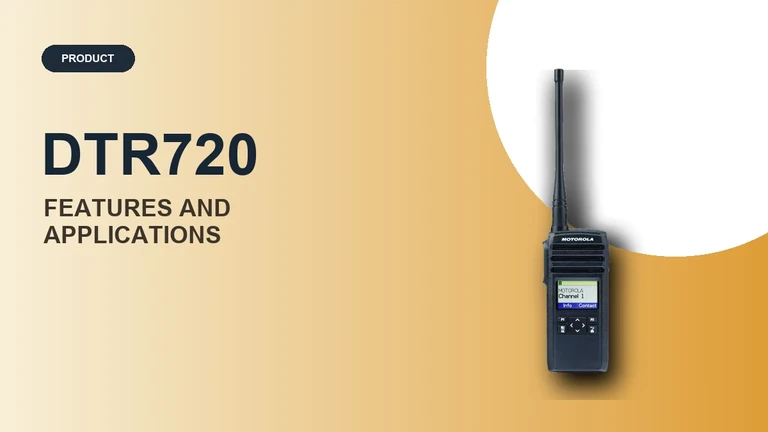
DTR720 HT radio: features and business applications
Explore the DTR720 HT radio, its digital features on 900 MHz, B2B applications and criteria for testing coverage before requesting a quote.

Intrinsically safe radio: certification guide
Understand what an intrinsically safe radio is and which certifications, accessories and documents to assess in hazardous areas.
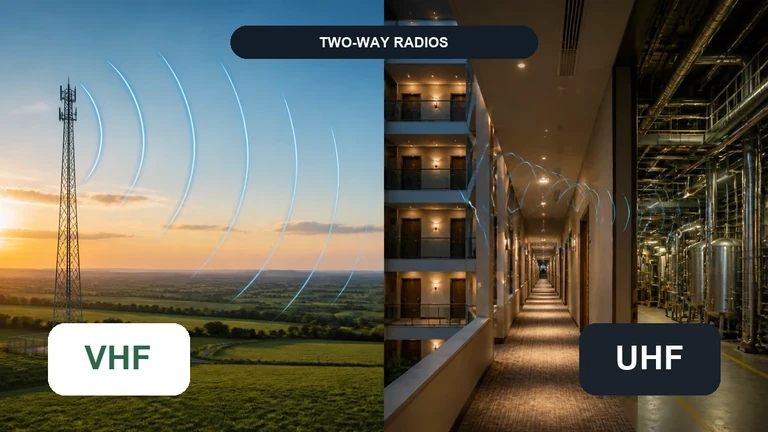
Two-way radios: VHF, UHF, analog and digital
Understand how two-way radios work and compare VHF, UHF, analog, digital and repeaters for a business operation.
QAP code: meaning and examples of radio usage
Understand QAP in Brazilian radio operations, see seven listening examples and learn to answer with useful information, not only a code.
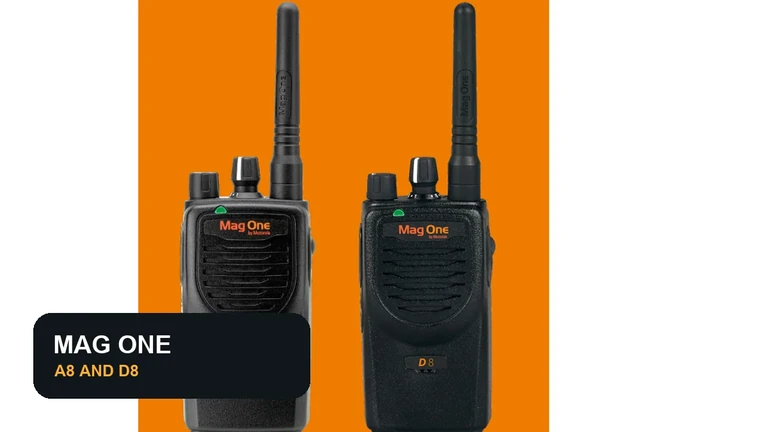
Motorola Mag One A8 and D8: differences and applications
Compare Motorola Mag One A8 and D8: analog, DMR, channels, battery, protection and criteria for maintaining or migrating a business fleet.
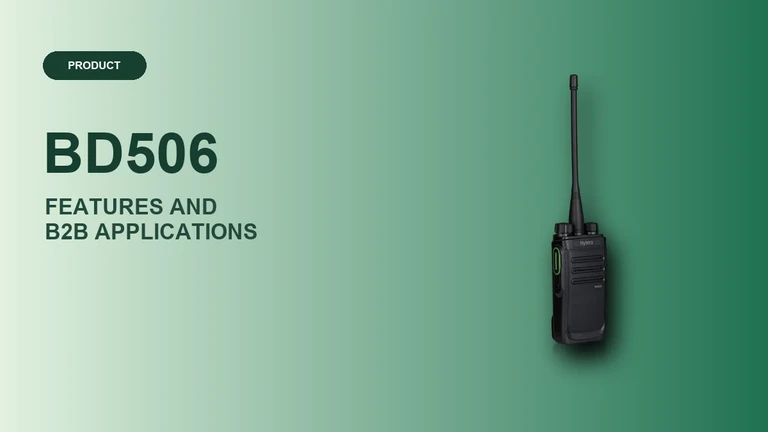
BD506 digital radio: features and B2B applications
Explore the Hytera BD506 digital radio: 48 channels, analog and DMR modes, batteries, IP54 protection and quote criteria.
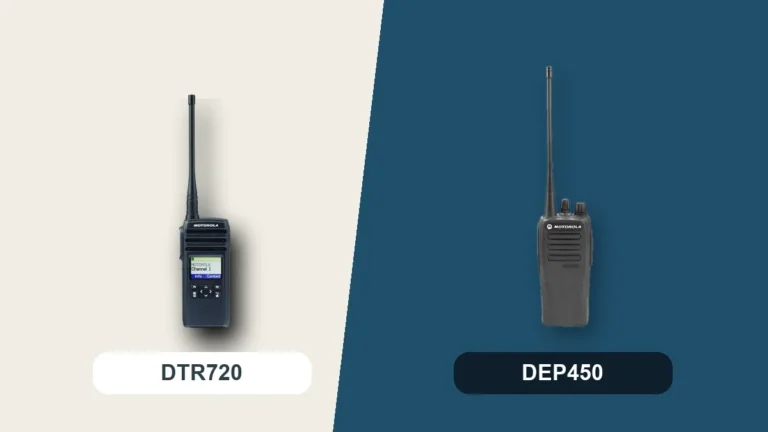
DTR720 and DEP450: which suits your operation best?
Compare DTR720 and DEP450 by technology, channels, screen, infrastructure and coverage. Understand why they cannot communicate directly.
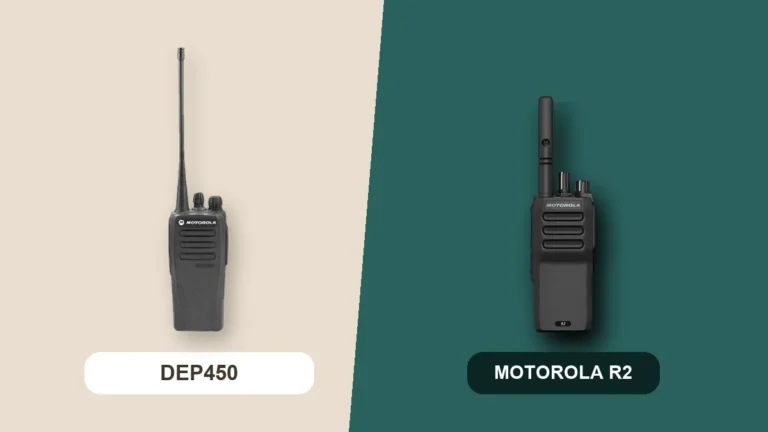
DEP450 or Motorola R2: comparison for businesses
Compare DEP450 or Motorola R2: channels, audio, battery life, protection, compatibility and criteria for maintaining or migrating your fleet.
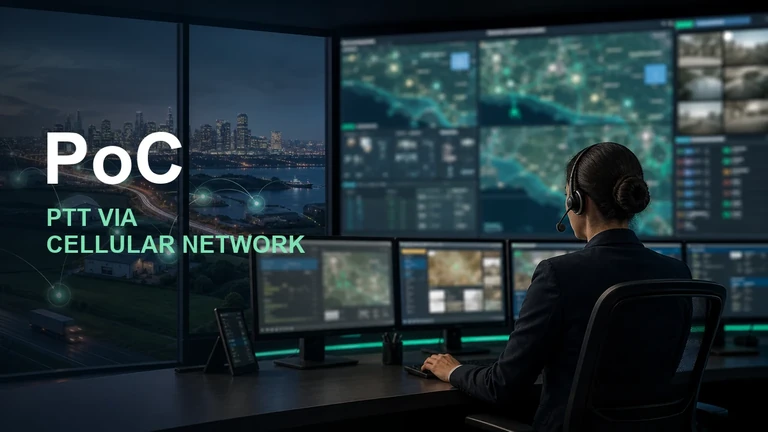
PoC two-way radio: how it works and when to use it
Understand how PoC two-way radios work over 4G and Wi-Fi, compare them with DMR and explore dependencies, applications and testing criteria.
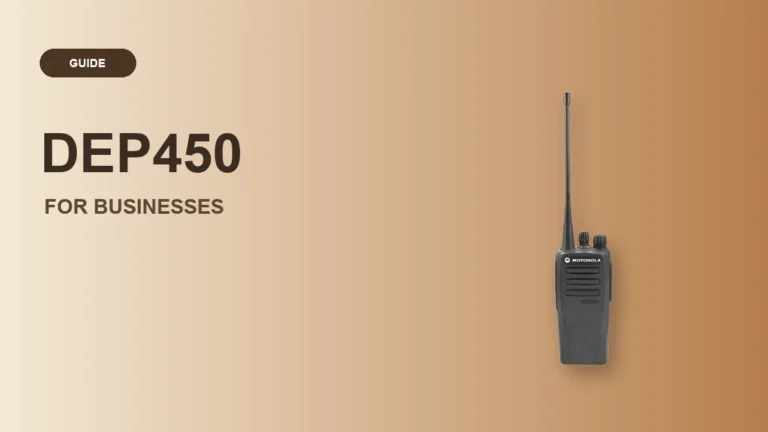
Motorola DEP450 two-way radio: business guide
Explore the Motorola DEP450 two-way radio: 16 channels, analog and digital DMR, batteries, IP54, applications and how to request a kit quote.

Baofeng two-way radio: what to assess before buying
Before buying a Baofeng two-way radio, check certification, frequency, programming, support, accessories and total cost for businesses.
Intelbras two-way radio: RPD 8 guide
Explore the Intelbras RPD 8 two-way radio: 48 channels, VHF or UHF, analog and DMR, battery, IP54 and quote criteria.
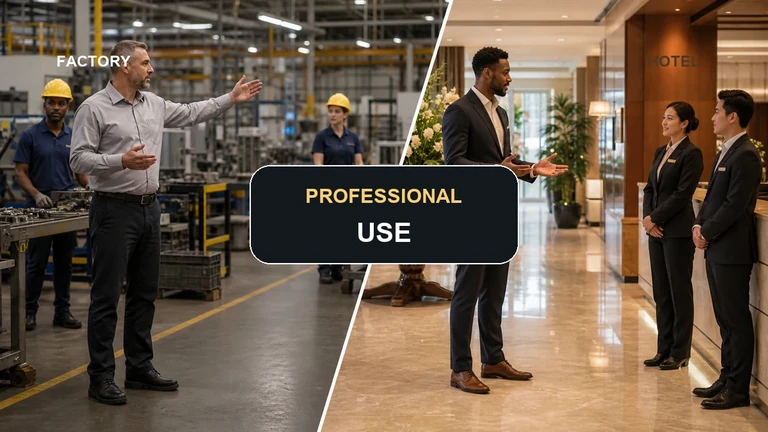
Walkie-talkie: what it is, how to use it and choose one
Learn how walkie-talkies work, compare license-free and professional radios, assess real range and choose equipment for your team.

Two-way radio rental in São Paulo: 10 benefits
Compare two-way radio rental proposals in São Paulo: quantity, period, coverage, batteries, accessories, frequency use and support.

Radio rental for events: what to test before opening the gates
Plan radio rental for events: check coverage, audio, accessories and batteries before opening the gates. See the ABC Mais Telecom checklist.
Buy or rent radios: 6 decision criteria
Buy or rent radios? Compare the period, quantity, coverage, accessories and usage routine before requesting a proposal for your operation.
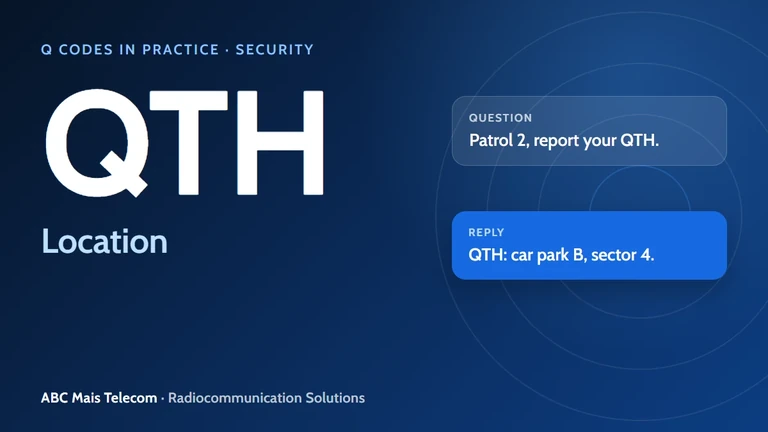
QTH: radio meaning and how to report your location
QTH means location on the radio. Official and operational meanings, complete conversations, ready-to-use phrases and reporting locations without ambiguity.
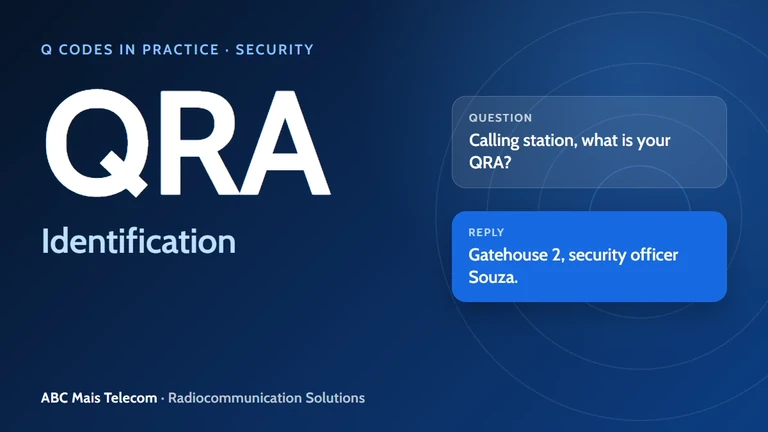
QRA: radio meaning and how to identify yourself on a call
QRA is the name or identification of the person speaking over the radio. Official and operational meanings, complete conversations and identifying posts, patrols and vehicles.
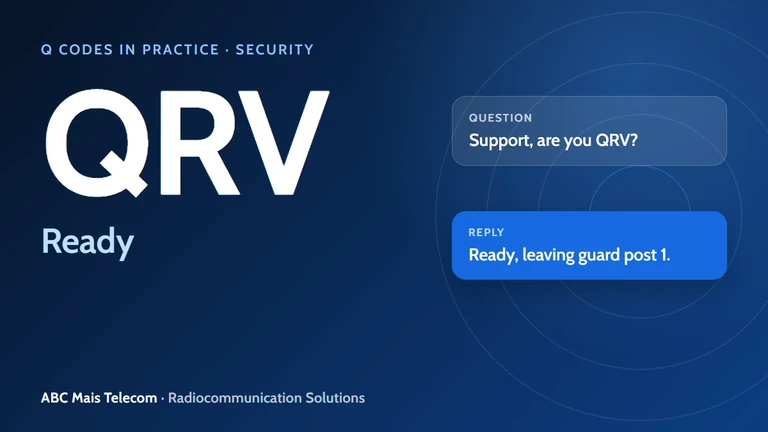
QRV: radio meaning (ready and available) and ready-to-use phrases
QRV means ready or available on the radio. Official meaning, differences between QRV, QAP and QSL, complete conversations and phrases for security and events.
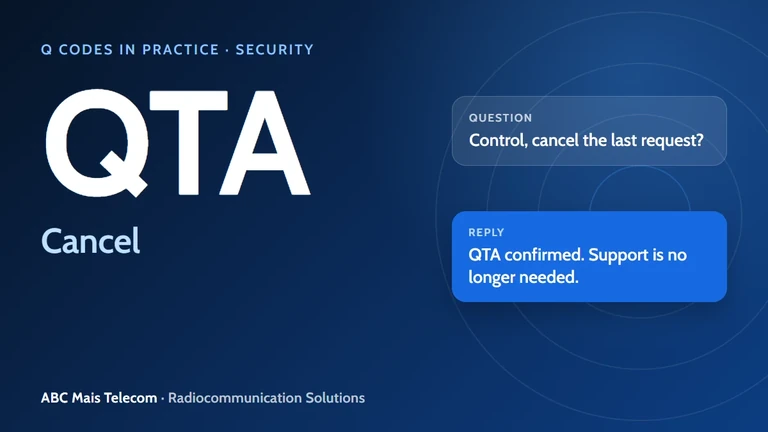
QTA: radio meaning and how to cancel a message
QTA means cancel or disregard a radio message. Official meaning, security use, complete conversations and how to correct information.
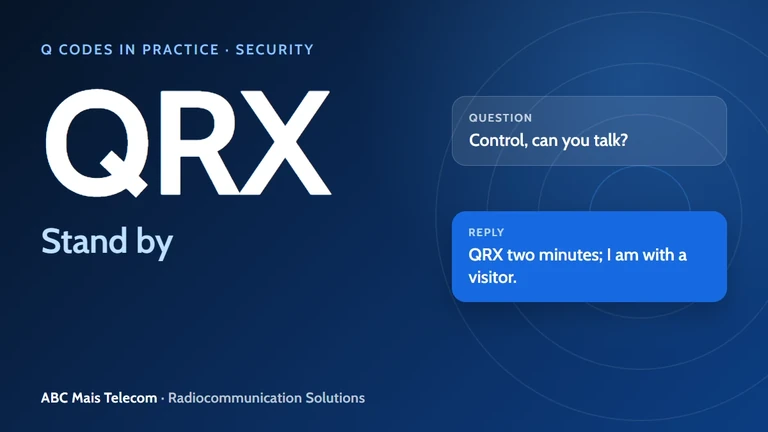
QRX: radio meaning (wait) and how to request a pause
QRX means wait on the radio. Official and operational meaning, complete conversations, phrases for security and events, and how to request a pause while stating the time.
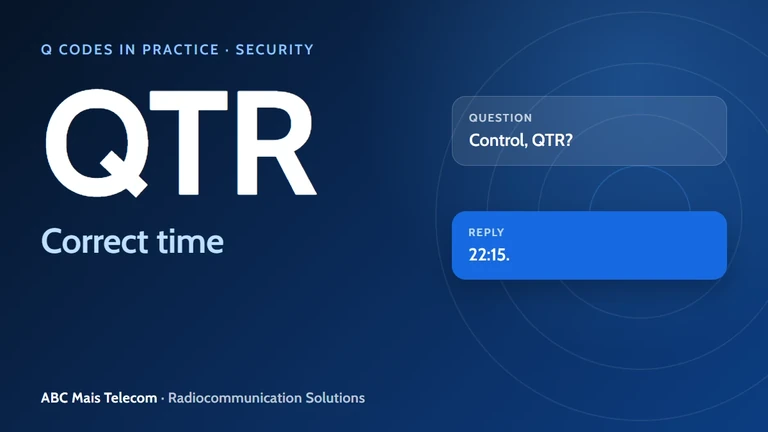
QTR: radio meaning (correct time) and how to use it during shifts
QTR means correct time on the radio. Official meaning, complete conversations, ready-to-use phrases and how to use time during shifts and incidents.
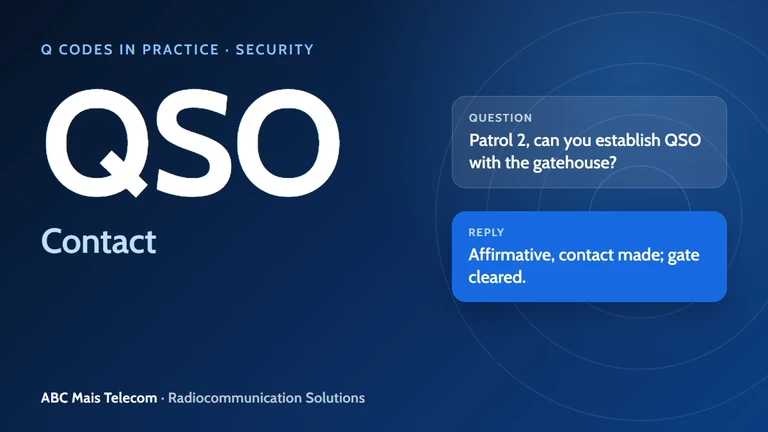
QSO: radio meaning and when to use it in operations
QSO means contact or communication between stations on the radio. Official meaning, use in amateur radio and security, and example conversations.
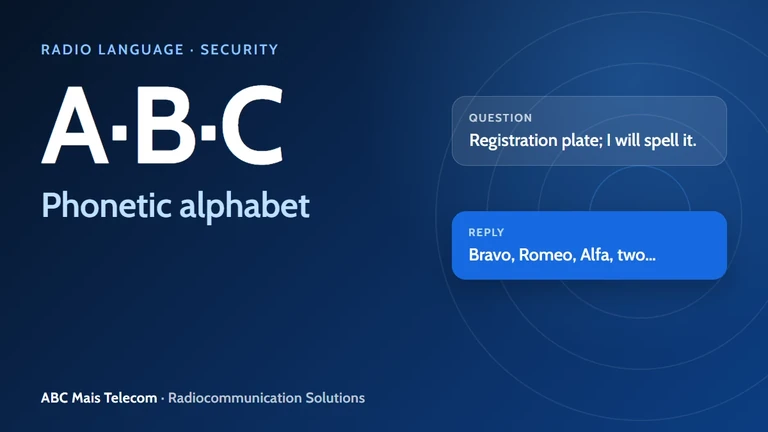
Phonetic alphabet: A-Z table, numbers and radio use
The A-Z radio phonetic alphabet with pronunciation, spoken numbers, example conversations and spelling vehicle plates, names and passwords at gatehouses and on patrol.
Security guard codes: the 25 most-used radio codes (with PDF card)
The 25 radio codes most used by guards, international standards versus local practice, ready-to-use phrases and a pocket PDF card.
Equipment responsibility form: a template for team radios
Equipment responsibility form template for issuing radios to a team, with shift custody records, a return checklist and what to do in case of loss or damage.
How much does two-way radio rental cost? What determines the price
Understand the five factors behind two-way radio rental costs: quantity, duration, site coverage, accessories and support. Compare proposals and build your request.
Long-range two-way radios: how many km in reality?
Technical guide · range and coverageA long-range two-way radio communicating directly with another, without infrastructure, usually covers a few hundred metres to a few kilometres: around 1 to 2 km…
Two-way radios: what they are, types, brands and how to choose
Complete guide · two-way radiosA two-way radio is a device that transmits and receives voice over radio waves. You press the PTT button to talk and release it to listen,…
Earpieces for two-way radios: types, connectors and how to choose
How to choose an earpiece for a two-way radio: 7 types, connectors by radio family, PTT, VOX and Bluetooth, use with noise and PPE, and how to confirm compatibility by part number.
Motorola Talkabout: when a licence-exempt walkie-talkie meets business needs
Motorola Talkabout: differences between T110BR, T210BR, T400BR, T470BR and T600BR H2O, where a licence-exempt walkie-talkie meets business needs and signs that an operation needs professional radios.
HT radios: meaning, types and how to choose for your business
What HT means: the origin of Handie-Talkie, differences between HT, walkie-talkie and mobile radios, the four types of business HT radio and what to check before buying.

Hytera XP60X: meet the XP6 series radio for industry
Meet the Hytera XP60X from the XP6 series: AI noise reduction, IP66/IP68 protection and radio fleet management features for industrial teams.
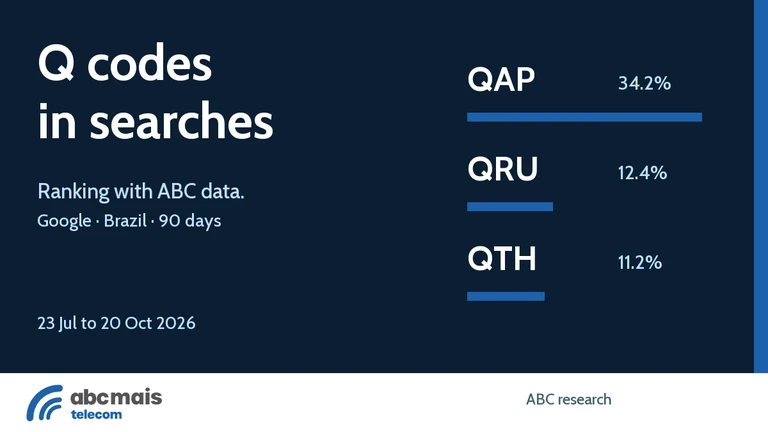
The most searched Q codes: ABC Mais Telecom ranking
Explore Q code searches where ABC Mais Telecom appeared on Google in Brazil: percentages, query wording, methodology and the limits of this first-party dataset.
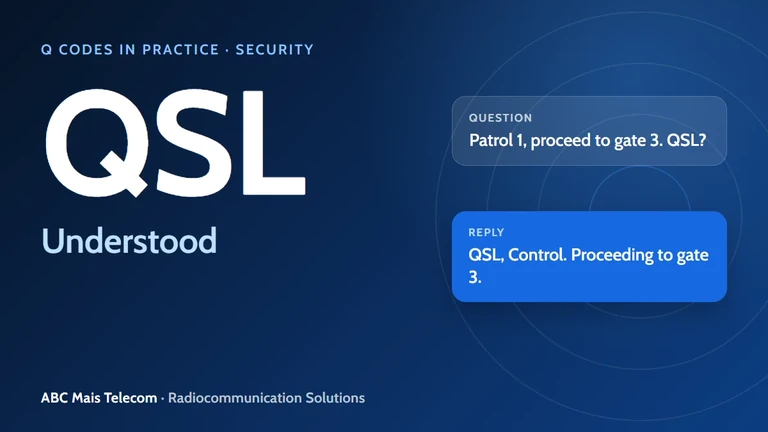
QSL: radio meaning and how to acknowledge a message
Learn what QSL means on the radio, how to acknowledge messages clearly and when to repeat key details. Includes conversations and a team procedure template.
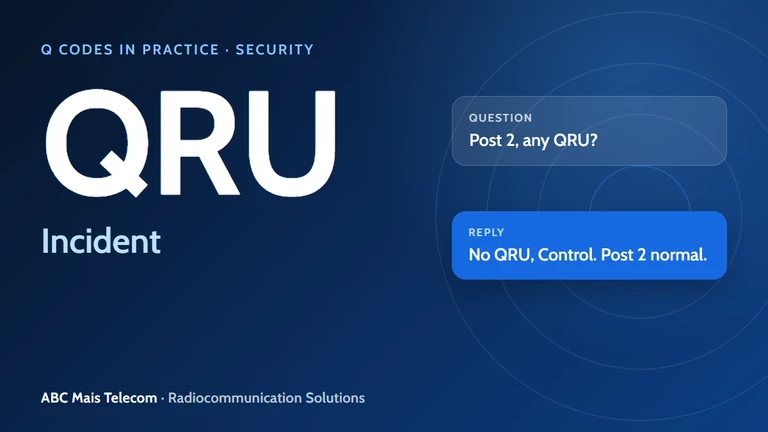
QRU: radio meaning and how to report an incident
Understand QRU in Brazilian radio operations, what no QRU means and how to report incidents. Includes examples, training and a procedure template.
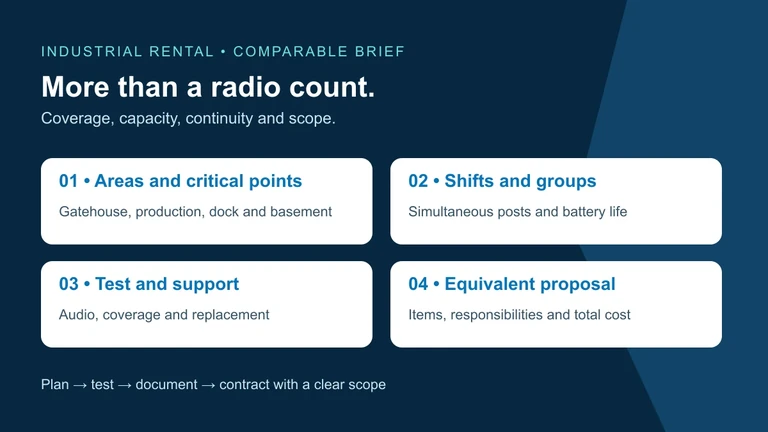
Two-way radio rental across shifts: how to organize it
Organize radio rental across shifts in industry and logistics: simultaneous users, charging, coverage, noise and the information needed to request a quote.
Two-way radio rental for stocktaking: how to plan it
Plan radio rental for stocktaking: teams by zone, counting, recounting, coverage and charging to coordinate the operation.
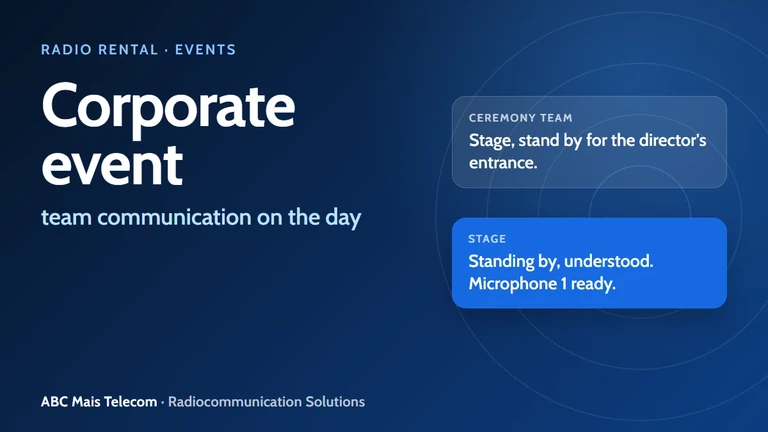
Corporate event: how to organize team communication on the day
How to organize team communication at a corporate event: roles, radio channel planning, event management cues, on-site tests and the event-day checklist.

Maintenance shutdown: how to plan radio communication for a scheduled outage
How to plan radio communication for a maintenance shutdown: work-front channels, work clearances, confined spaces, lifting, emergencies and temporary rental.