
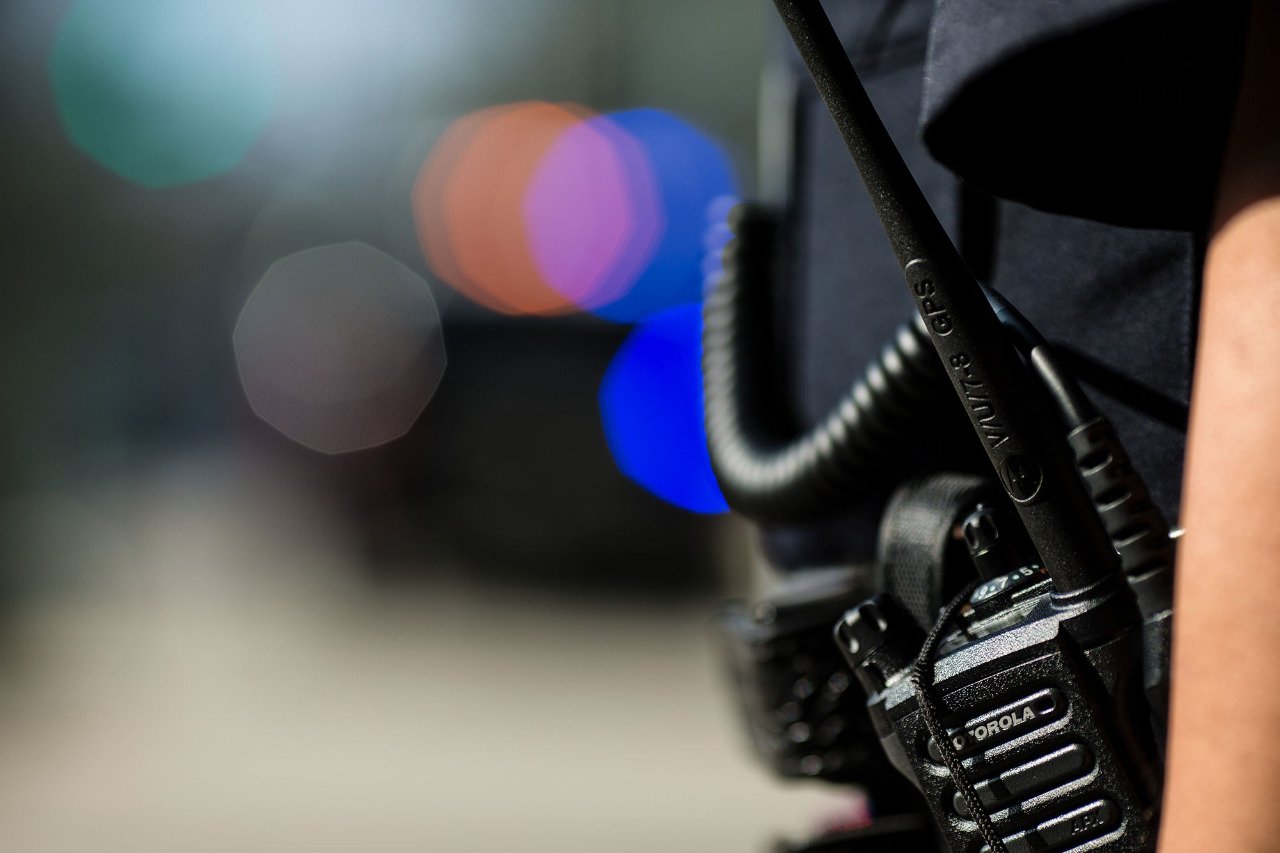
Phonetic alphabet: A to Z radio table and spelling vehicle plates
Radio language · security
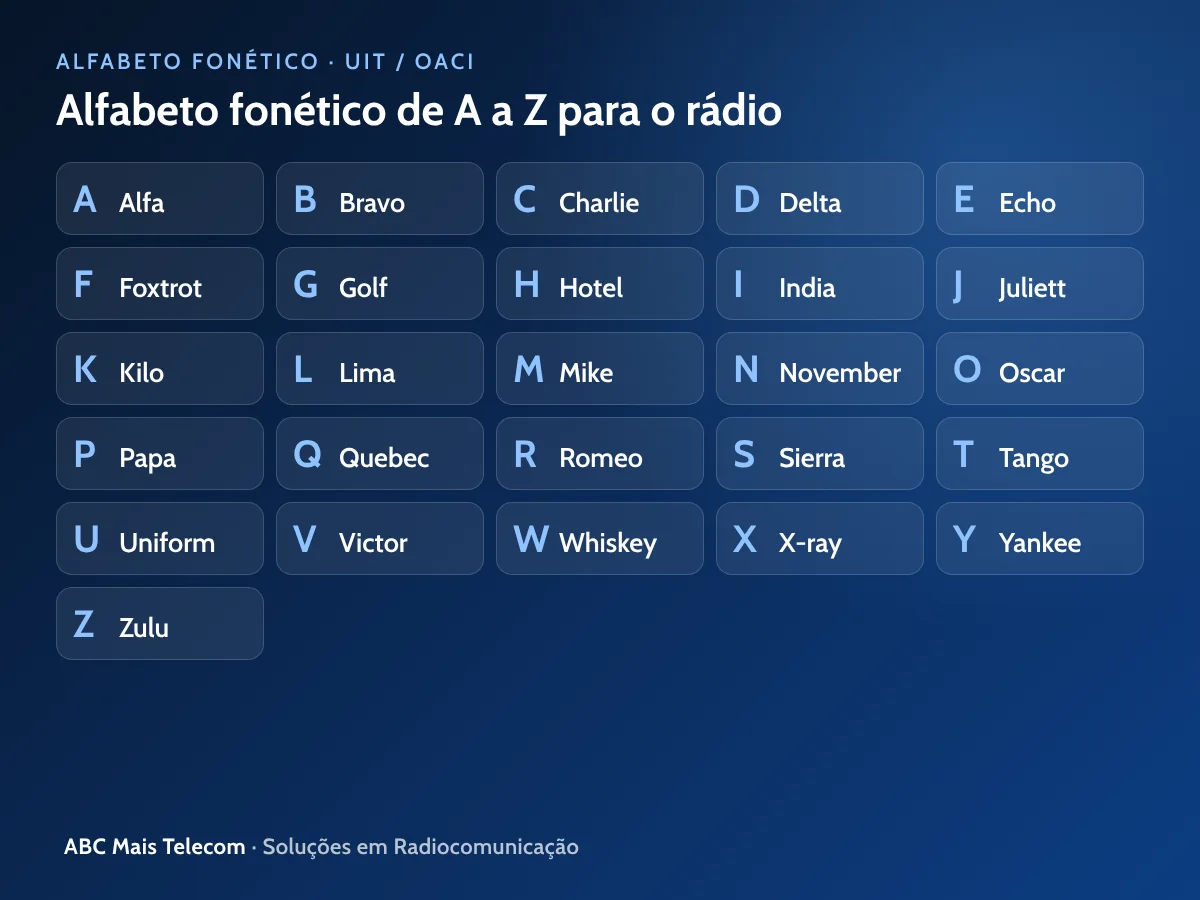
The phonetic alphabet for radio replaces every letter with an easily understood word, even in noise: A is Alfa, B is Bravo, C is Charlie and so on through Z, Zulu. It is the international standard used in aviation, at sea, by police and guards to spell vehicle plates, names and passwords correctly.
Updated on · ABC Mais Telecom technical team, Motorola Solutions and Hytera two-way radio sales and rental.
A to Z phonetic alphabet (with pronunciation)
The words below belong to the ITU and civil aviation (ICAO) spelling alphabet, also adopted by NATO. The adjacent pronunciation is a Portuguese approximation to help beginners: uppercase syllables are stressed.
In the Brazilian aeronautical phraseology manual (DECEA, MCA 100-16), R is written “Romeu.” In security teams, “Romeo” is more commonly heard. Either form is understood; the important thing is that the whole team uses the same one.
Why use the phonetic alphabet over the radio
Without the phonetic alphabet, similar letters are easily confused over the radio. B, D, P and T sound almost alike with wind, running engines or sirens. So do M and N. A guard noting “BTD” instead of “PTB” admits the wrong vehicle or records a nonexistent plate.
Phonetic alphabet words were chosen to be distinct and recognizable to speakers of different languages. Nobody confuses “Bravo” with “Delta.” That is why the same standard is used by pilots, sailors, military personnel, police and private security teams worldwide.
Inventing words on the spot (“B for ball,” “D for dice”) instead of using the phonetic alphabet may seem practical, but everyone chooses different words and confusion returns. The standard works precisely because it is the same for everyone.
Phonetic alphabet and numbers: how to say digits over the radio
Numbers also cause errors, especially 3 and 6 (“três” and “seis”) and 1 and 7 in noisy environments. There are therefore specific ways to say each digit.
| Digit | Aviation (MCA 100-16) | Security practice* |
|---|---|---|
| 0 | zero | negativo |
| 1 | uno (ou uma) | primeiro |
| 2 | dois (ou duas) | segundo |
| 3 | três | terceiro |
| 4 | quatro | quarto |
| 5 | cinco | quinto |
| 6 | meia | sexto |
| 7 | sete | sétimo |
| 8 | oito | oitavo |
| 9 | nove | nono |
* Ordinal forms (primeiro, segundo…) are customary in many security and police teams but are not a national standard: confirm your company’s practice. In aviation, MCA 100-16 specifies saying each digit separately and using “meia” for 6, as in “meia zero zero” for 600.
How to spell vehicle plates, names and passwords with the phonetic alphabet
| What to spell | Written | How to say it over the radio |
|---|---|---|
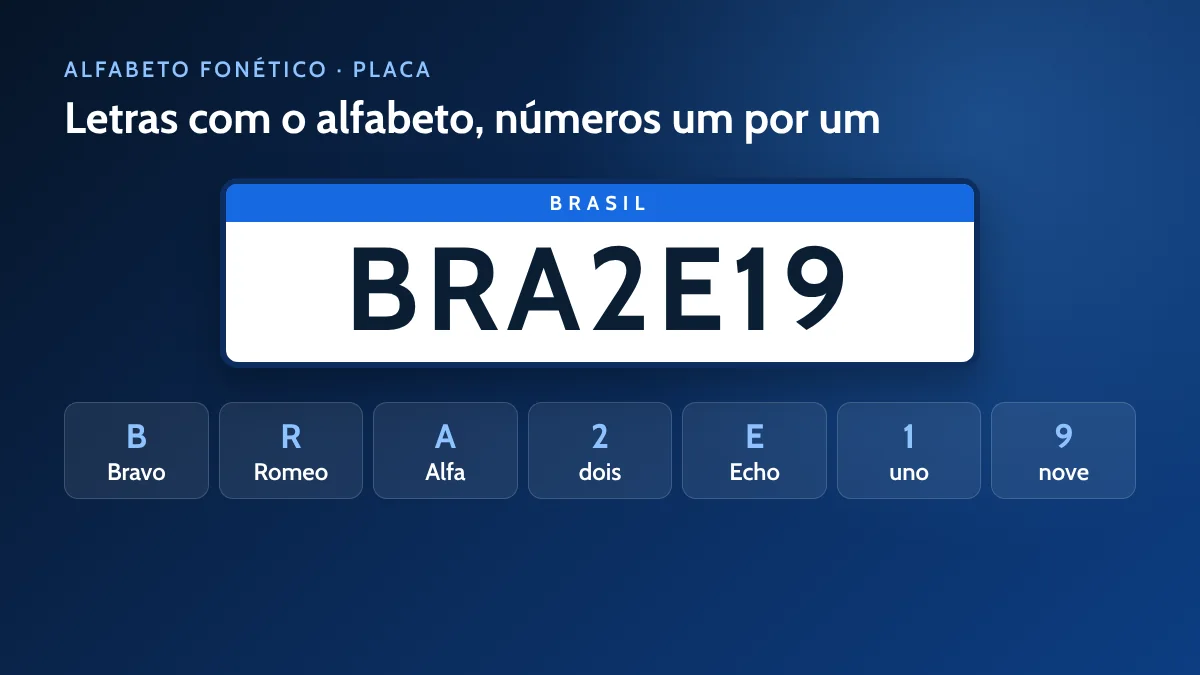
| Mercosur vehicle plate | BRA2E19 | Bravo, Romeo, Alfa, dois, Echo, uno, nove |
| Older vehicle plate | ABC1234 | Alfa, Bravo, Charlie, uno, dois, três, quatro |
| Name | SOUZA | Sierra, Oscar, Uniform, Zulu, Alfa |
| Block and floor | Block C, 6th | Bloco Charlie, sexto andar |
| Invoice | NF 4806 | November Foxtrot, quatro, oito, zero, meia |
Phonetic alphabet in practice: 3 complete conversations
Each conversation shows the message with the phonetic alphabet and, below, the same message in plain language.
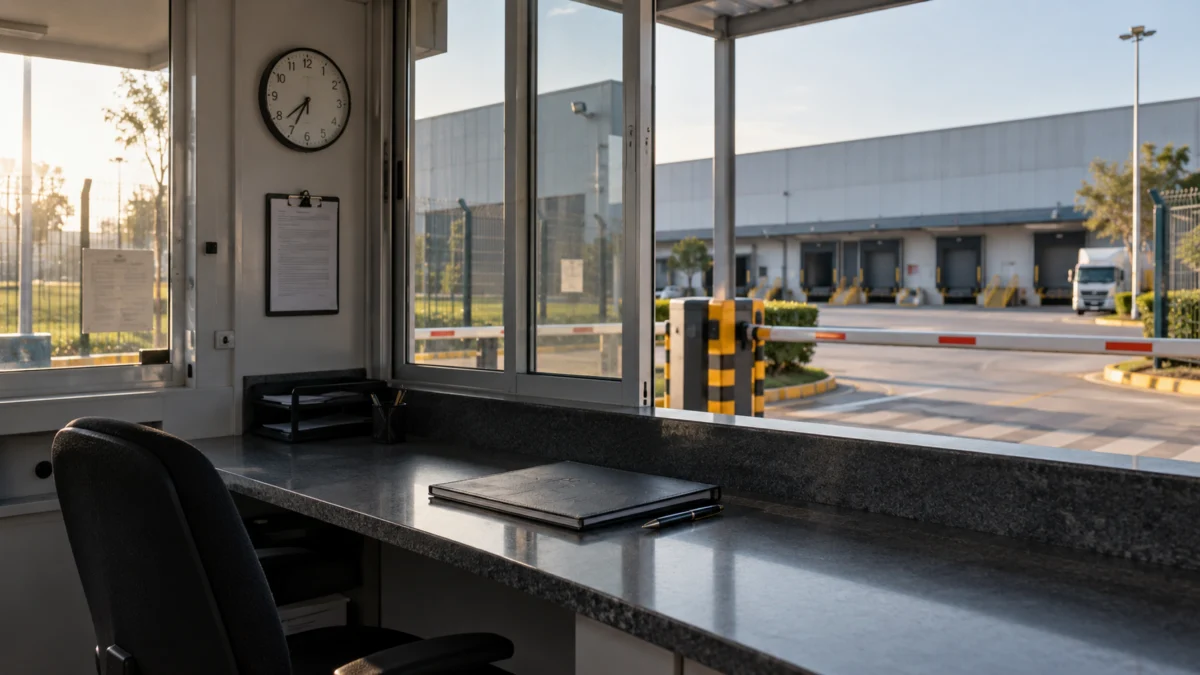
Vehicle plate at the gatehouse
Goal: Supervision records the plate correctly.
- Gatehouse
“Supervision, Gatehouse 1. Transport company’s truck at the barrier. Plate, I will spell it: Bravo, Romeo, Alfa, dois, Echo, uno, nove.”
In plain language: There is a transport company’s truck at the entrance. Its plate is BRA2E19. - Supervision
“Copied: Bravo, Romeo, Alfa, dois, Echo, uno, nove. Cleared for dock 2.”
In plain language: I noted BRA2E19. Access to dock 2 can be granted. - Gatehouse
“QSL, cleared for dock 2.”
In plain language: Understood, cleared for dock 2.
Visitor name
Goal: confirm a difficult name.
- Reception
“Gatehouse, visitor for HR. Name: Wagner. Spelling: Whiskey, Alfa, Golf, November, Echo, Romeo.”
In plain language: The HR visitor is called Wagner, with a W. - Gatehouse
“I repeat: Whiskey, Alfa, Golf, November, Echo, Romeo. Visitor badge 14.”
In plain language: I confirm the name Wagner. He receives badge 14.
Event credential
Goal: check a credential by its code.
- South Access
“Coordination, credential with code Kilo, Papa, sete, três. Is it valid?”
In plain language: The credential has code KP73. Is it valid? - Coordination
“Kilo, Papa, sete, três is valid. Stage access cleared.”
In plain language: Yes, KP73 is valid. Stage access can be granted.
5 rules for using the phonetic alphabet at gatehouses and on patrol
- Announce that you will spell. “Plate, I will spell it” prepares listeners to write it down.
- Speak in short blocks. Letters first, pause, then numbers.
- Ask for a repeat. Whoever wrote it down reads it back; only then confirm with QSL.
- Do not invent words. “B de bola” and “C de casa” vary from person to person. The standard is the same for everyone.
- Practice with the shift team. Use the pocket PDF card at shift changes until the team can speak without looking it up.
Common mistakes with the radio phonetic alphabet
- Speaking too quickly. The person writing needs time. Say one word at a time.
- Mixing standards. One person says “Alfa” and another “A for airplane.” Agree on one standard.
- Skipping read-back. Without repetition, nobody knows whether the record is correct.
- Forgetting numbers. Correct letters with a wrong number still produce a wrong plate.
10-minute training at shift change
- Draw five random plates. Use fictional plates and ask each guard to spell one with the phonetic alphabet.
- Reverse roles. The listener writes and reads it back.
- Practice your own name. Each person spells their name and post call sign.
- Practice with noise. Repeat near a gate or generator to simulate daily work.
Phonetic alphabet in post procedures: template
| Item | Suggested text |
|---|---|
| Adopted standard | ITU/ICAO spelling alphabet (Alfa, Bravo, Charlie… Zulu). |
| Numbers | Define: digit by digit (uno, dois… meia) or ordinal forms (primeiro, segundo…). |
| When to spell | Vehicle plates, names, invoices, credentials and access codes. |
| Confirmation | The person taking notes reads back before QSL. |
| Training | Spelling round at shift change, once a week. |
5 questions for team refresher training
- How do you spell plate FGH3A21?Answer: Foxtrot, Golf, Hotel, três, Alfa, dois, uno.
- What is the word for J?Answer: Juliett.
- How is 6 said in aviation?Answer: “meia.”
- What should you do after spelling?Answer: wait for the person writing to read it back.
- Can I use “B for ball”?Answer: no; use the standard: Bravo.
The phonetic alphabet in aviation, at sea and in security
Today’s phonetic alphabet was standardized in the 1950s for civil aviation and later adopted in maritime, military and emergency communication. In Brazil, the air traffic control phraseology manual (MCA 100-16) contains the same word list. In private security, it is taught as part of radio communication and used daily at gatehouses, on patrol and in monitoring centers.
The phonetic alphabet is part of radio language, alongside Q code. For reporting locations, see QTH; for identification, QRA; and for the everyday list, the security guard codes.
Phonetic alphabet frequently asked questions
Is the police phonetic alphabet different?
In general, police and security companies use the same international-standard words (Alfa, Bravo, Charlie…). How numbers are spoken varies most.
Why “Alfa” rather than “Alpha”?
ITU and ICAO lists spell “Alfa” and “Juliett” so speakers of different languages pronounce them in the same way.
How is 6 said over the radio?
In Brazilian aviation, “meia.” In many security teams, “sexto.” Use the standard agreed by your company.
Is it the same as the International Phonetic Alphabet (IPA)?
No. IPA is used in linguistics to represent sounds. On the radio, the name refers to the spelling alphabet: Alfa, Bravo, Charlie…
Do I need to memorize the whole phonetic alphabet?
Over time, yes. Initially, keep a printed table at the gatehouse and use the pocket card.
How should accented letters be spelled?
Spell the letter and state the accent: “Echo with an acute accent.” Vehicle plates and codes have no accents.
Sources consulted
Training a new gatehouse or event team? ABC Mais Telecom rents two-way radios for property security, gatehouses and events in the state of São Paulo, with the use of Anatel-licensed frequencies already included in the rental.
See rental for securityRental WhatsAppPrefer to buy? Radios for security
