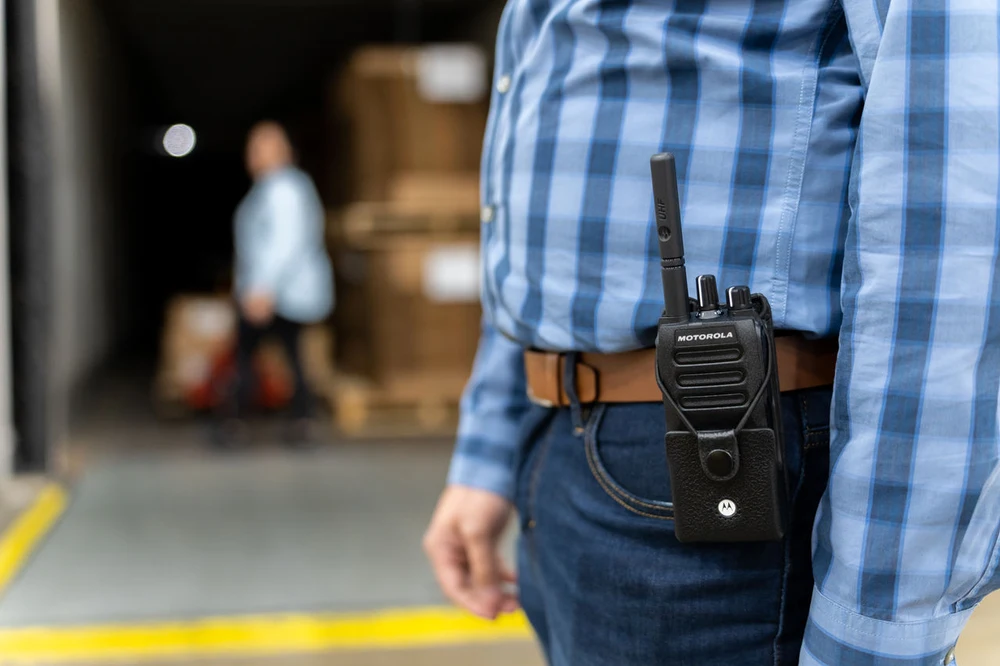
What is an HT radio?
HT is the Brazilian market’s name for a portable handheld radio (from handheld transceiver). It differs from mobile radios installed in vehicles or bases and repeaters that extend coverage. In daily business operations, Motorola HTs are used by gatehouse, security, maintenance, logistics, production, hospitality, events and field teams.
Professional HTs differ from recreational radios in ruggedness, audio quality, battery life, channel and group programming and the ability to operate with repeaters and systems. See the differences in the guide walkie-talkies: how to choose for professional use.
Motorola HT radio comparison
The table summarizes the 12 portables in the current range. Data comes from the sheets published on each product page; channel count and some features vary by version:
| Model | Technology | Channels | Protection | Highlight |
|---|
| R2 | Digital DMR and analog | 64 | IP55 | Entry-level MOTOTRBO; replaces DEP450 and EP450 |
|---|
| DEP250 | Digital DMR and analog | 16 or 160 | IP54 | Compact, with or without display |
|---|
| DEP550 | Digital DMR and analog | 16 | IP55 | No display, IMPRES batteries |
|---|
| R5 | Digital DMR and analog | depending on version | IP67 | AI audio, long battery life |
|---|
| R7 | Digital DMR and analog | depending on version | IP68 | Bluetooth, Wi-Fi and GNSS |
|---|
| SL500e | Digital DMR and analog | 128 | IP54 | Slim, OLED screen, Bluetooth and Wi-Fi |
|---|
| Mag One X10d | Digital DMR and analog | 64 | IP55 | Voice recording and USB-C |
|---|
| DGP5050 | Digital DMR and analog | 32 | IP57 | Rugged, no display |
|---|
| DGP8050 | Digital DMR and analog | 32 | IP57 | Rugged, with GPS |
|---|
| DTR720 | Digital 900 MHz | 50 | IP54 | Station license exemption |
|---|
| RVA50 | Analog | 8 | IP55 | Simple, UHF or VHF |
|---|
| R7Ex | Digital DMR and analog | depending on version | Ex certification | Explosive atmospheres, IIA and IIC variants |
|---|
For photos, full specifications and accessories, open each model’s page. For a brand overview including mobile radios, repeaters and PoC, see Motorola radios.
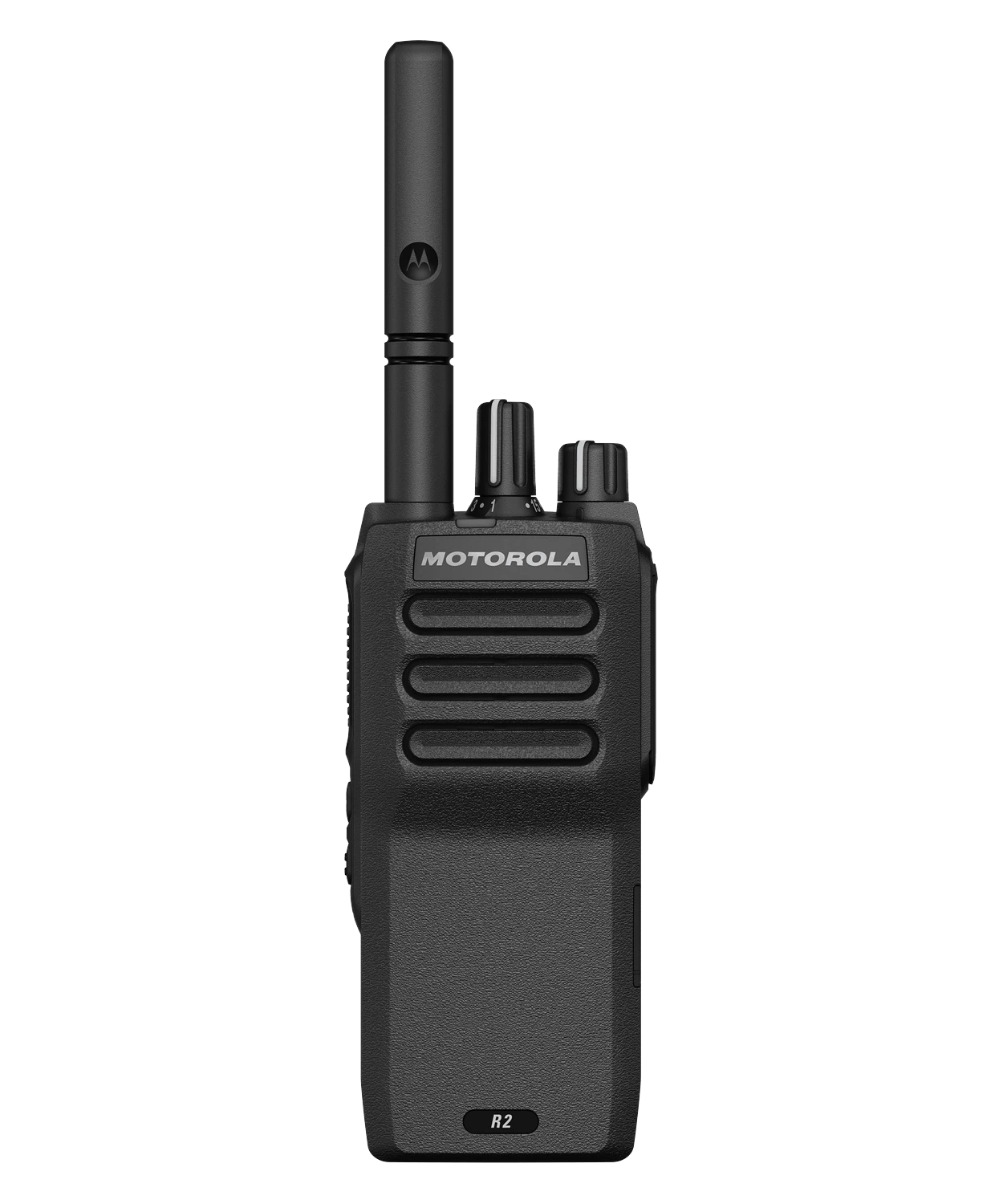
Motorola R2
Digital DMR and analog, 64 channels and IP55. Recommended replacement for DEP450 and EP450 users.
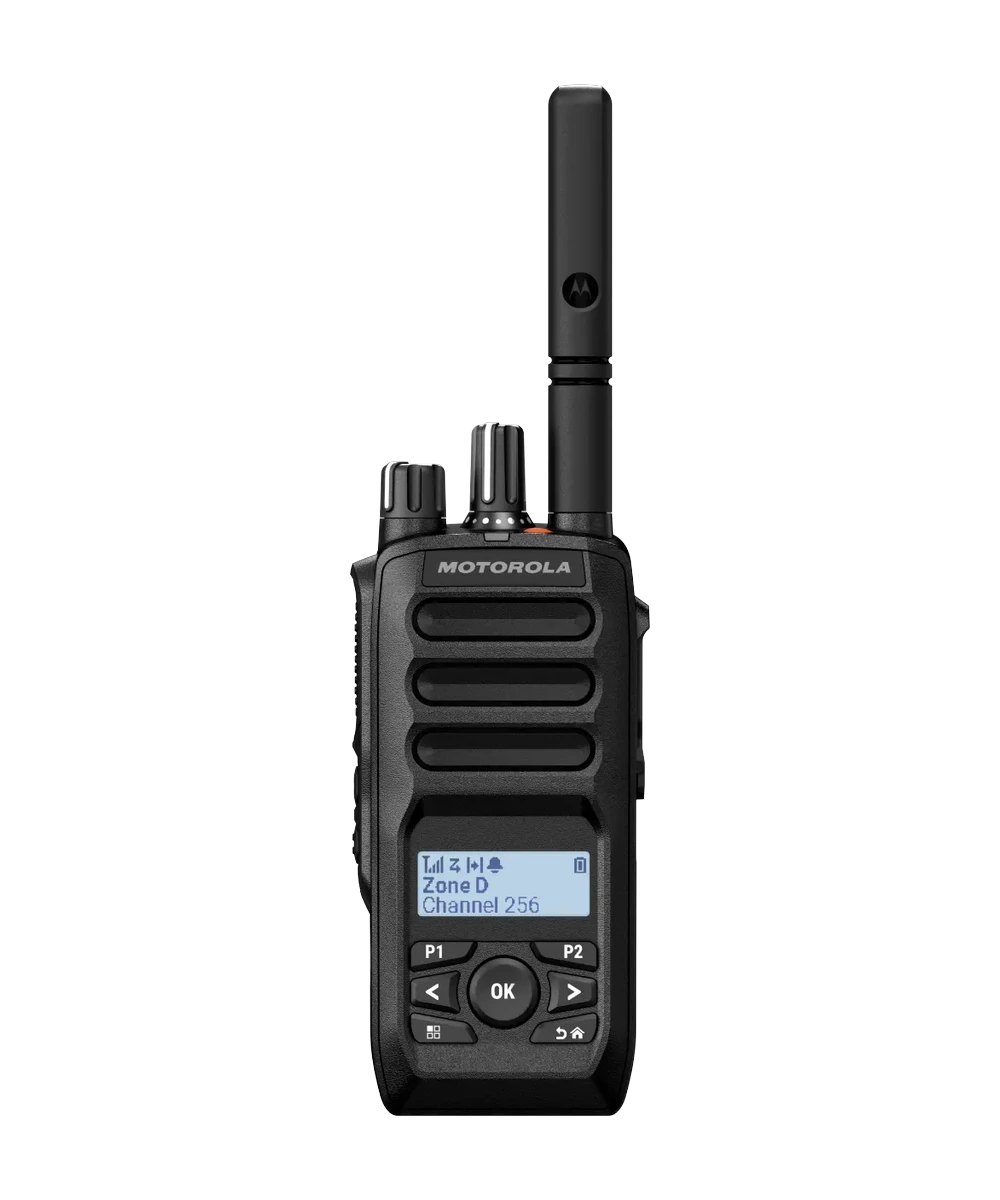
Motorola R5
DMR with artificial intelligence audio, IP67 and long battery life, in keypad and non-keypad versions.
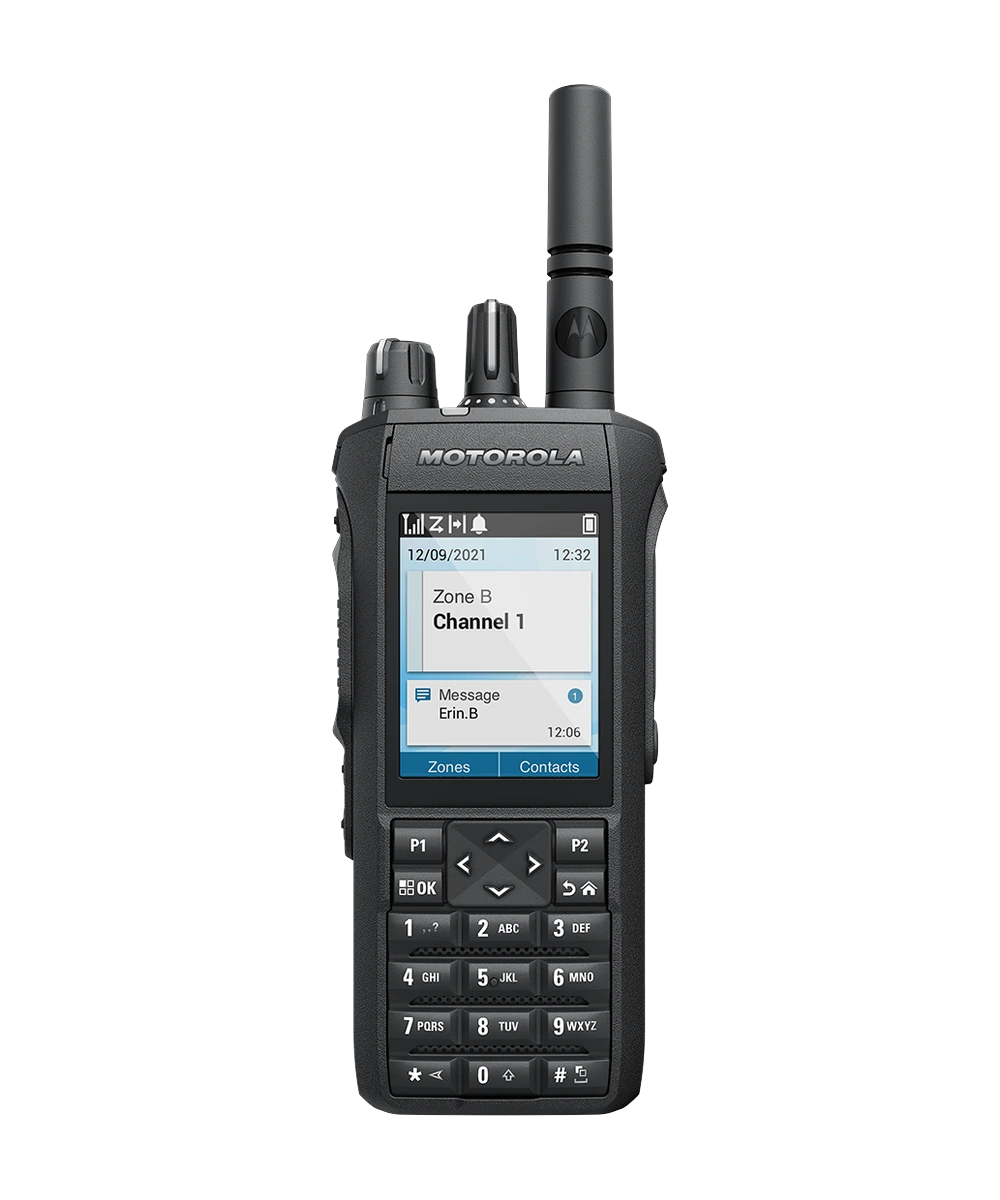
Motorola R7
Top of the portable MOTOTRBO range: IP68, Bluetooth, Wi-Fi and GNSS.
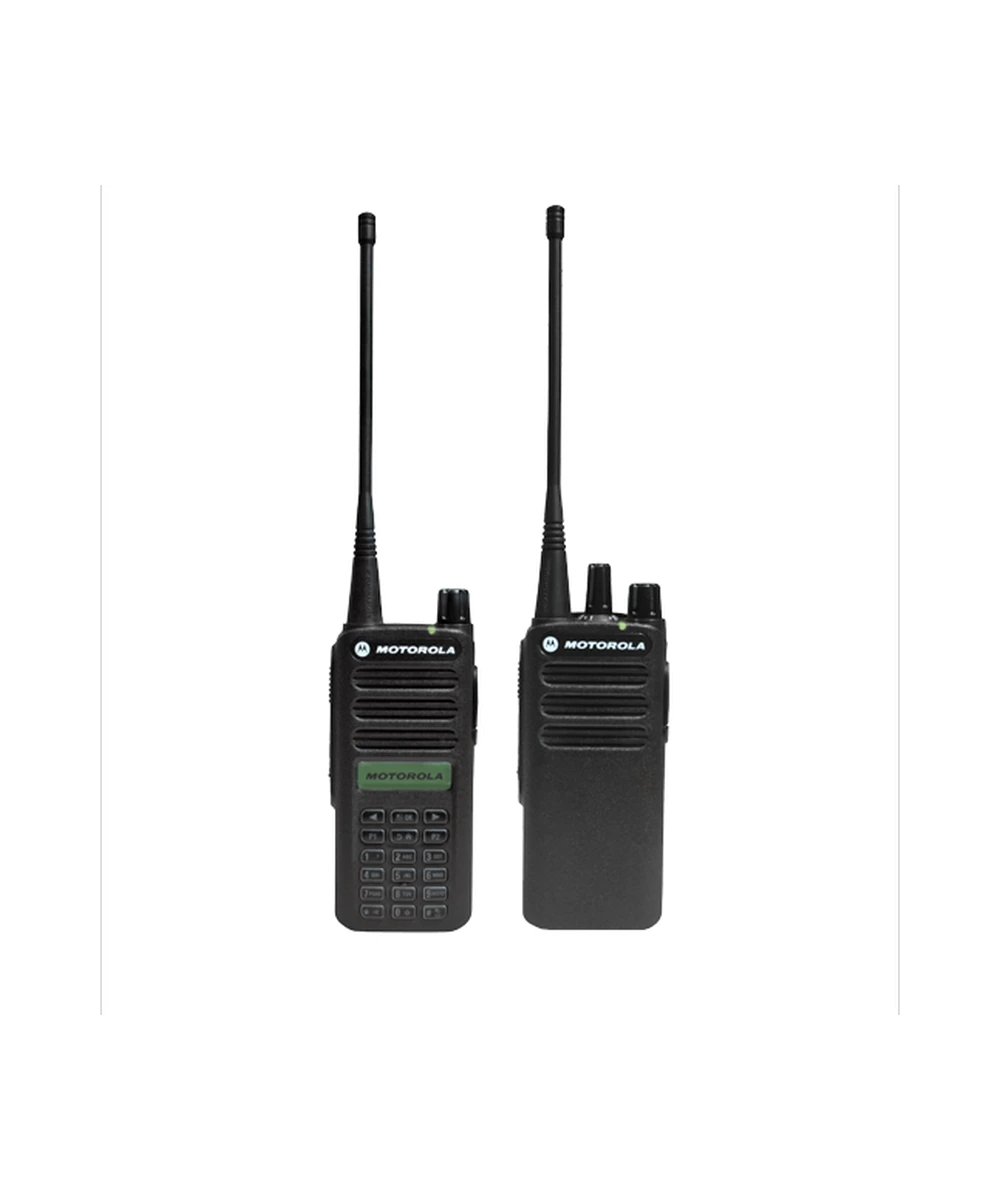
Motorola DEP250
Digital and analog, compact, with display and non-display versions.
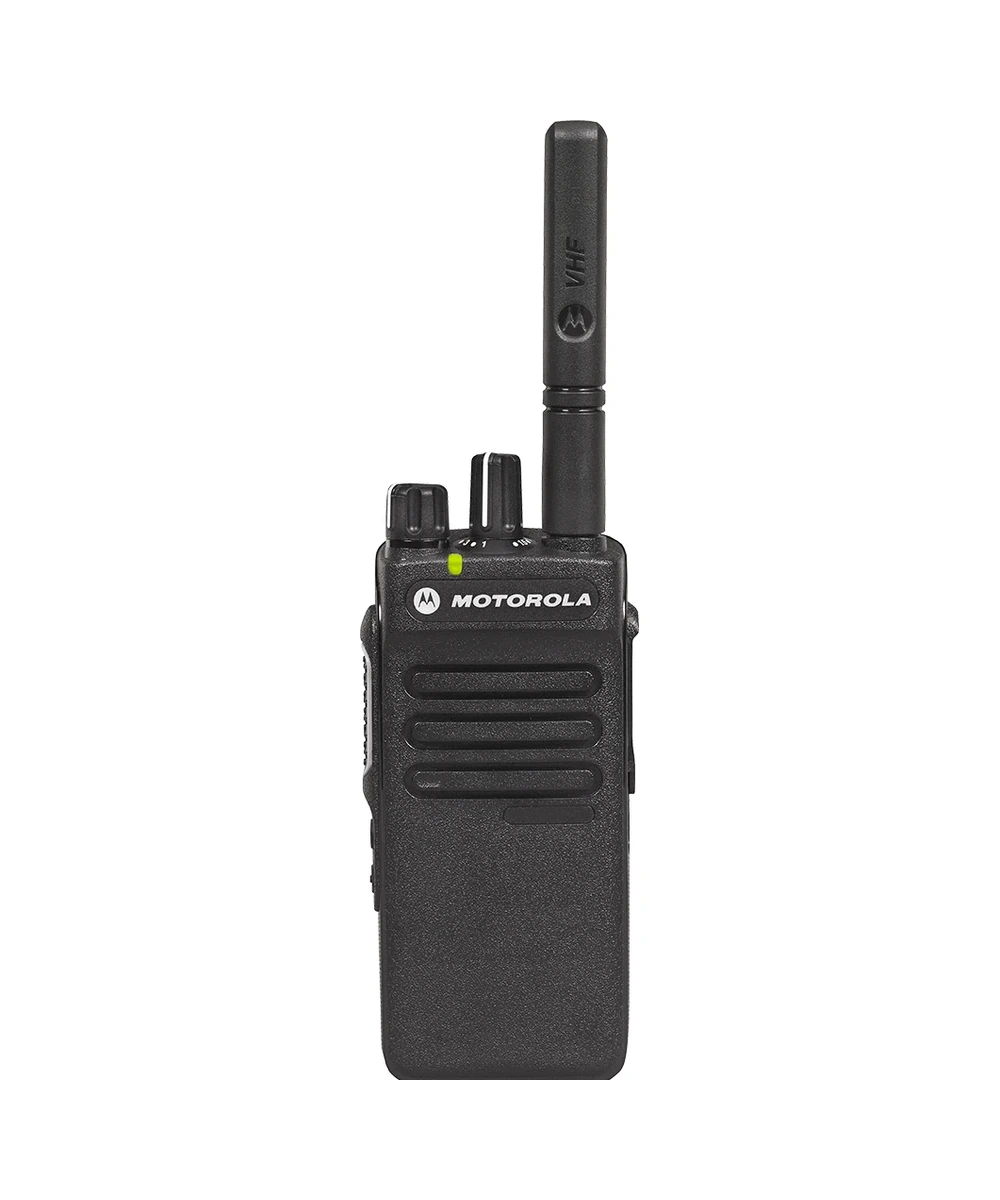
Motorola DEP550
No display, DMR and analog, IP55 and IMPRES batteries.
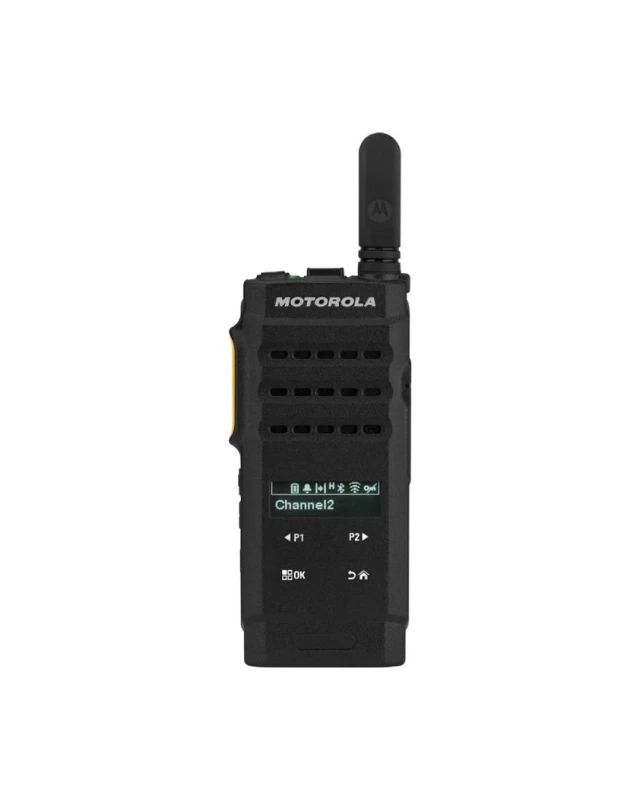
Motorola SL500e
Slim and discreet, with OLED screen, Bluetooth and Wi-Fi, for public-facing service.
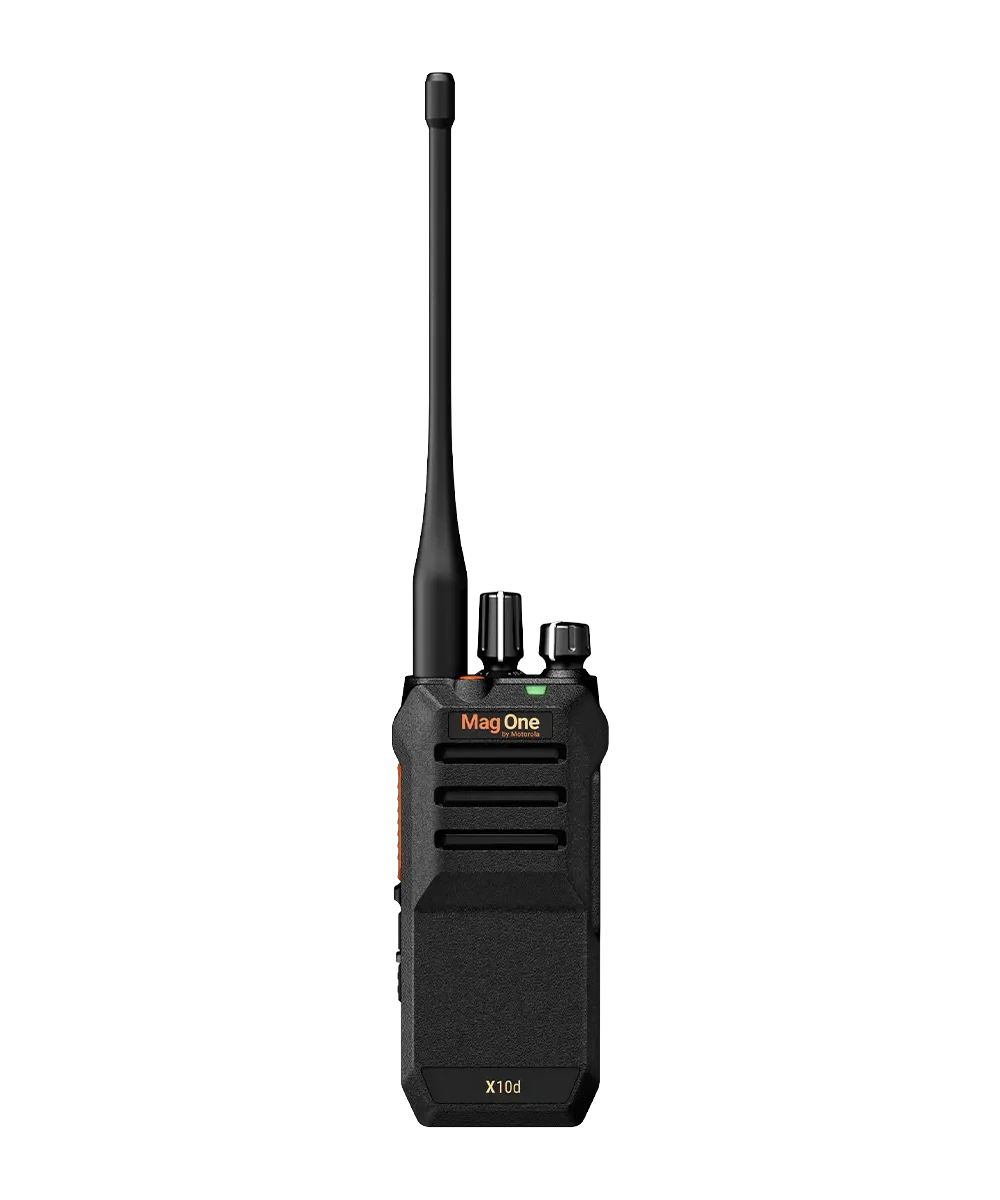
Motorola Mag One X10d
Digital and analog, 64 channels, IP55 and voice recording.
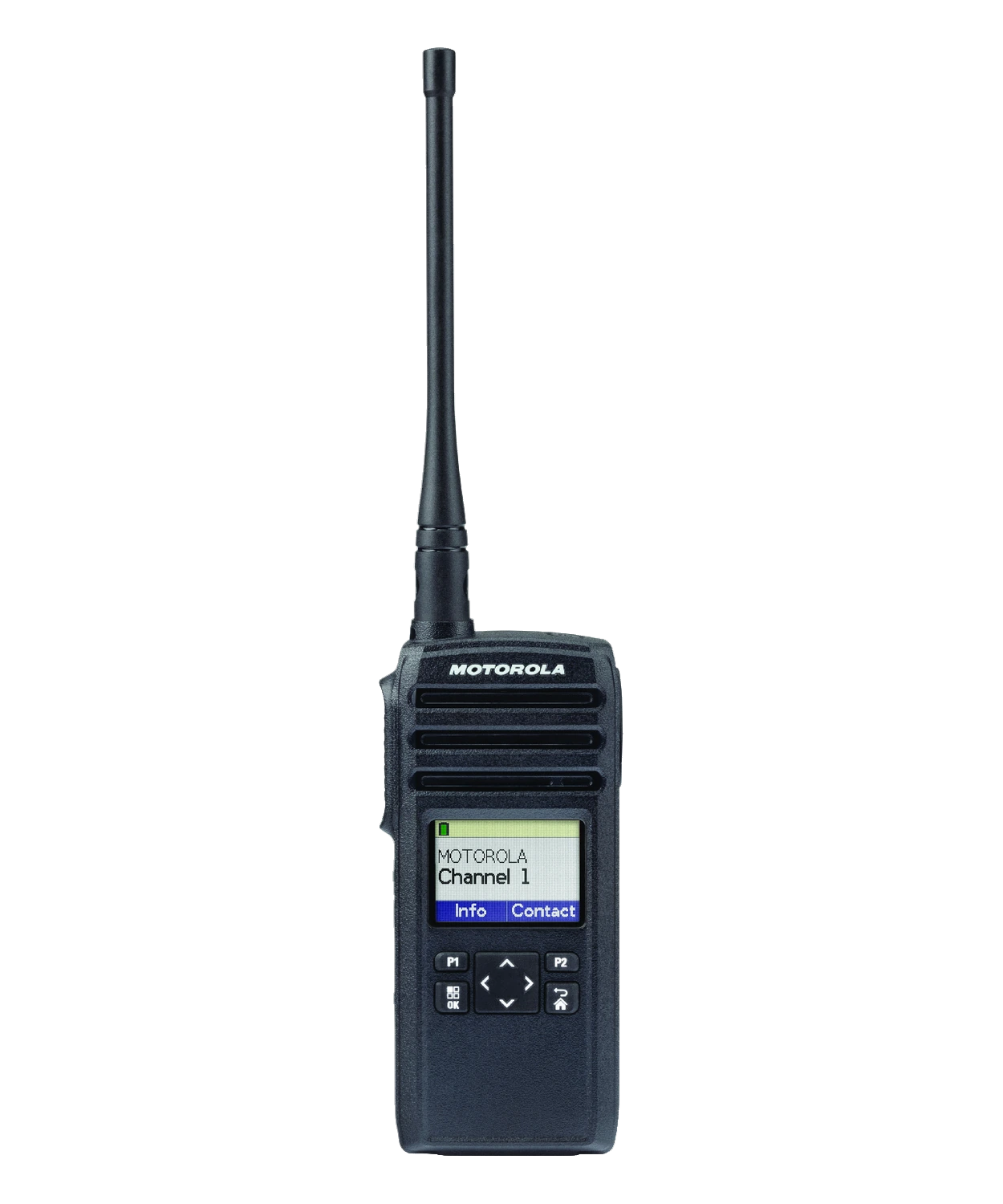
Motorola DTR720
Digital at 900 MHz, 50 channels and station license exemption.
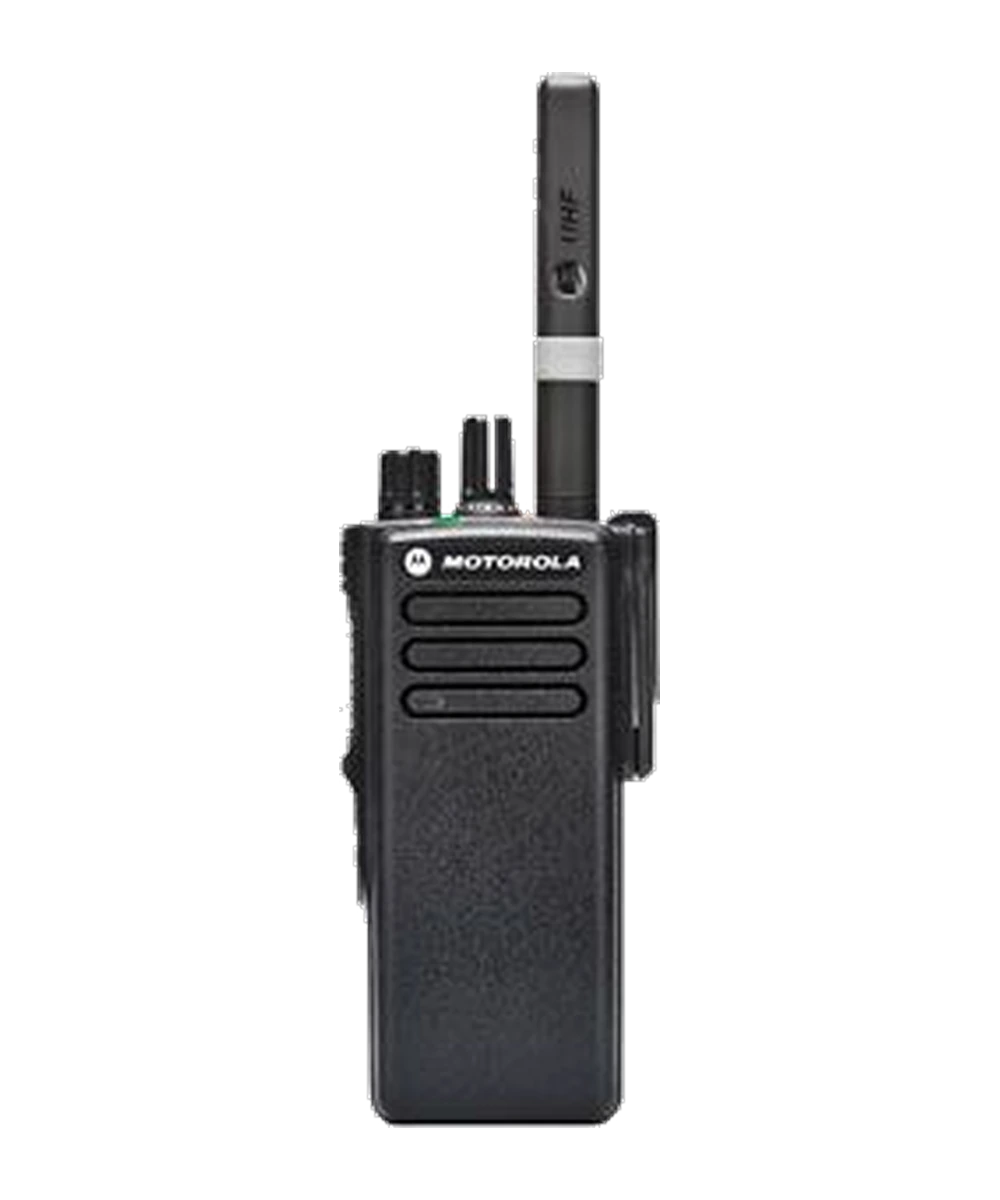
Motorola DGP5050
Rugged, IP57, DMR and analog, with IMPRES batteries.
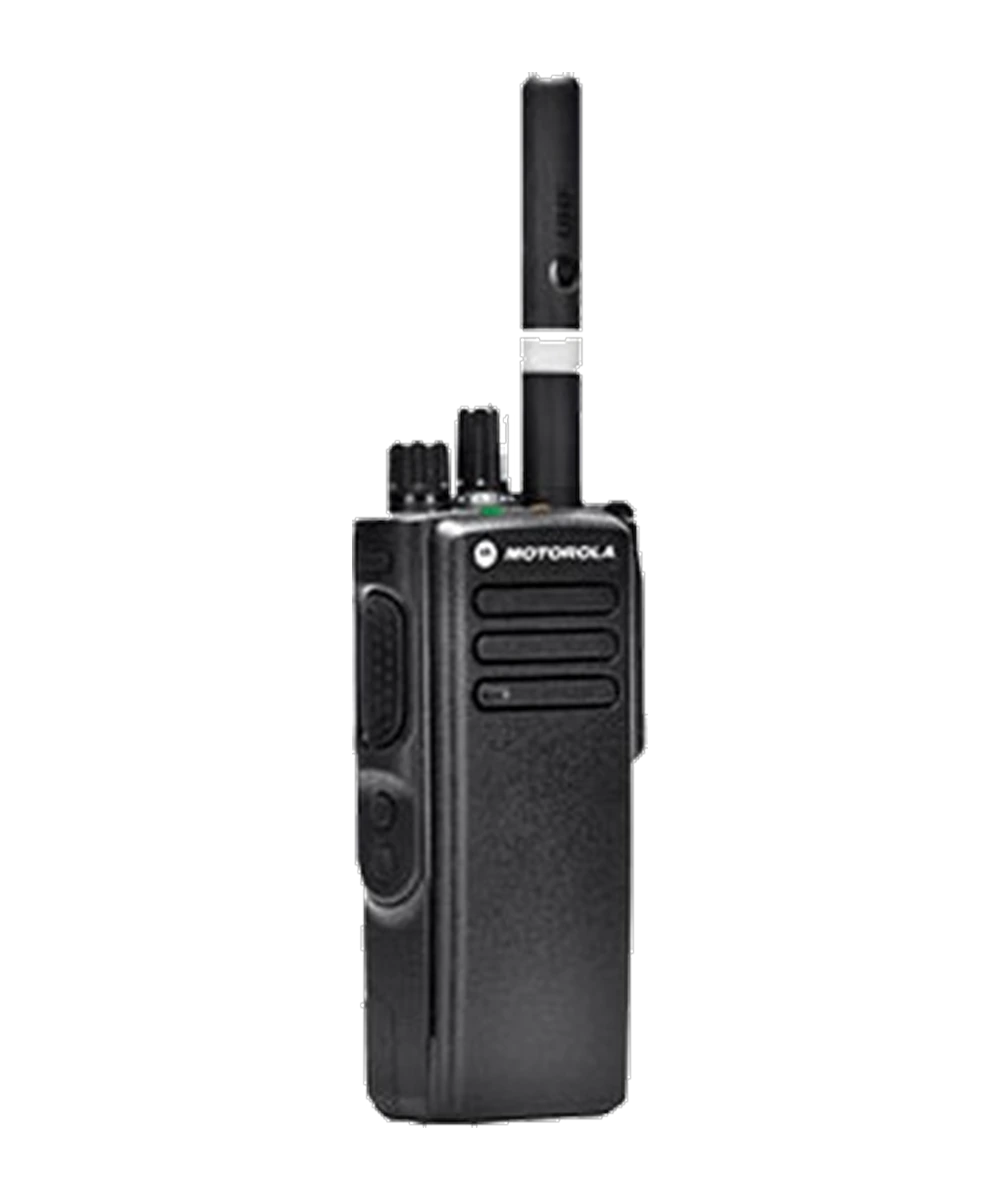
Motorola DGP8050
Rugged, IP57, with GPS, for critical operations.
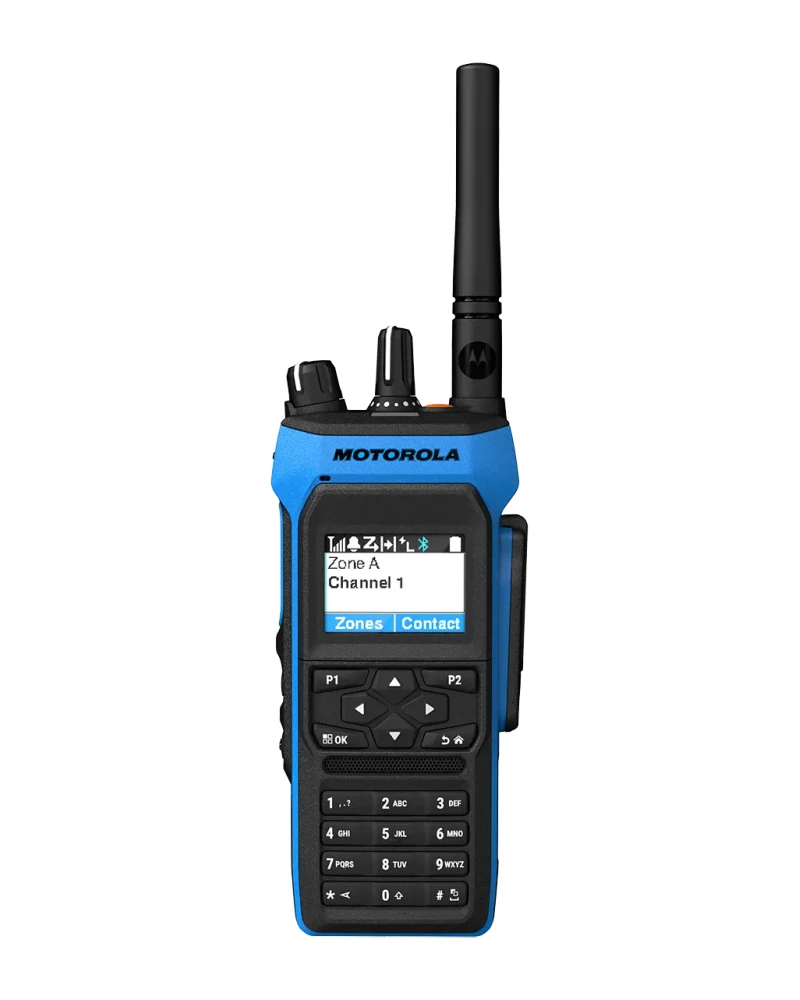
Motorola R7Ex
Version for explosive atmospheres, with certifications according to variant.
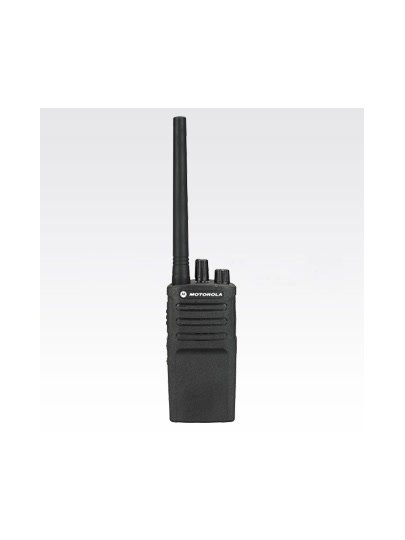
Motorola RVA50
Simple analog, 8 channels, for small teams.
Motorola digital HT or analog?
Almost the entire current range consists of Motorola digital HTs on the MOTOTRBO platform (DMR standard), which also operates in analog mode. In digital mode, audio stays clean near the coverage limit, batteries last longer, compatible systems fit two conversations on the same channel and features include private calls, text messages and emergency alerts. Analog remains useful for communicating with older radios and very simple operations, as with the RVA50.
For those migrating, MOTOTRBO’s advantage is programming analog and digital channels in the same radio: the new HT communicates with the old fleet during the transition, then the whole fleet moves to digital.
Which Motorola HT for each use
- Teams starting out or replacing older radios: R2 or DEP250, with a good balance of features and simplicity.
- High noise and intensive use: R5 or R7, with louder audio and processing that reduces background noise.
- Those preferring a radio without a display, to avoid accidental channel changes: DEP550, DGP5050 or R2.
- Public-facing service: SL500e, slim and discreet, for reception, hospitality and retail.
- Harsh environments: DGP5050, DGP8050 or R7, with IP57 protection or higher.
- Classified hazardous area: R7Ex or DGP8550EX, with explosive-atmosphere certification according to the area.
- Retail and hospitality without a station license: DTR720, digital at 900 MHz.
- Small teams and simple use: RVA50, analog.
Motorola HT radios by sector
The same model can be excellent for one operation and unsuitable for another. Some examples of selecting Motorola portables by sector:
- Property security: rugged HT, with emergency button and, depending on model, GPS and man-down alert for night patrols.
- Logistics: HT with loud audio and battery for 12-hour shifts, used with lapel microphones by forklift operators.
- Industry: HT with high IP protection and noise-isolating headset; in hazardous areas, only Ex-certified HTs.
- Hospitality and retail: slim, lightweight HT with discreet earpiece to avoid disturbing guests and customers.
- Condominiums: simple HT without a display to avoid accidental channel changes at gatehouse and on patrol.
- Events: HT with good battery life and a headset, for production and security in loud environments.
Weight, size and ergonomics
Those using an HT all shift feel the difference in weight and size. Slim models such as the SL500e fit a jacket pocket; rugged models such as the DGP8050 are larger but withstand drops and rain. Large, well-spaced buttons help glove wearers, and a locking channel selector prevents accidental changes. These details inform professional Motorola HT selection alongside the data sheet.
How to test the HT before buying the fleet
For large fleets, it is worth testing the chosen model at the operation’s most difficult locations before finalizing quantities: basement parking, back of the warehouse, machinery room, farthest outdoor area. The test shows whether radio-to-radio communication is enough or a repeater is needed, and helps choose between UHF and VHF. Talk to the sales team about organizing this test for the suggested Motorola HT.
HT battery and operating time
A Motorola HT’s operating time depends on battery, mode (digital lasts longer than analog), power and how much the person talks. Sheets such as the R5’s indicate up to 32 hours depending on battery, on a standard usage cycle. In practice, for 12-hour shifts with extensive conversation, allow spare batteries for those who talk most, such as leaders and gatehouse staff. IMPRES batteries used with compatible chargers report charge status and help extend service life.
Motorola HT radio accessories
The right accessory transforms HT use: lapel microphone for hands-free work, noise-isolating headset for high noise levels, discreet earpiece for service, higher-capacity batteries and multi-unit chargers to organize charging. Each product page has a compatible accessories section with item codes, and compatibility is checked in the proposal.
Care to make your HT last longer
A well-maintained Motorola HT radio lasts many years. Some simple practices: charge the battery in a compatible charger without leaving the radio switched on in it all the time; keep the antenna firmly screwed on; clean battery and accessory contacts; use a case in dusty environments; and send radios that fell into water or have low audio to technical service before the problem worsens. For fleets, periodic inspection avoids surprises on critical operating days.
Programming and cloning
A professional Motorola HT must be programmed with the operation’s channels, groups and features. ABC Mais Telecom delivers radios programmed, and as the fleet grows, new radios receive the same configuration so everyone communicates in the same groups. If operations change, technical service handles reprogramming.