
Two-way radio rental for construction and building work
Two-way radio rental for construction follows the schedule: radios for each work front, a dedicated lifting channel and quantities adjusted as work progresses. ABC Mais Telecom prepares tailored proposals for builders, contractors and developers, with professional Motorola Solutions and Hytera radios, accessories for dust, rain and noise, and the use of Anatel-licensed frequencies already included.
Following the schedule
quantities that follow the construction phases
Anatel included
use of licensed frequencies already included in the rental
Lifting channel
dedicated group for signaler and operator
Construction environment
attention to dust, rain, drops and noise
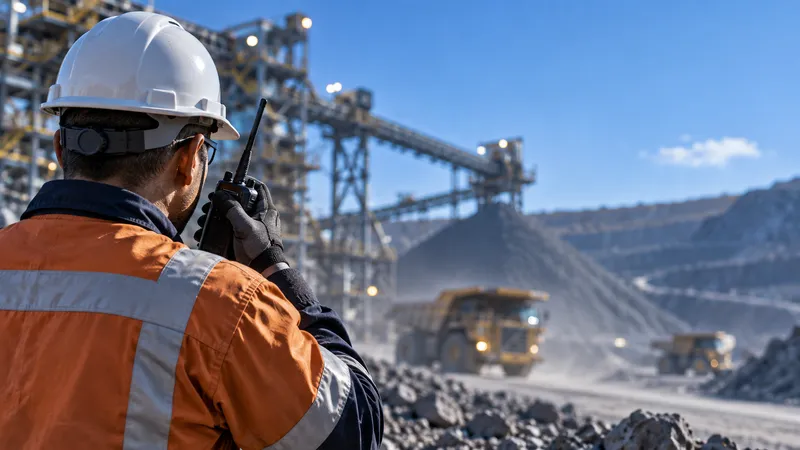
On a construction site, communication is part of safety
The person guiding a crane’s load cannot rely on shouting or mobile phone coverage. The radio makes the instruction clear, at the right time.
Why construction suits rental
Every construction project has a beginning, middle and end, and radio needs change at each phase. During foundations and structural work, lifting and outdoor crews need more radios; during finishing, teams spread across floors; at handover, work scales down until completion. Two-way radio rental for construction follows this cycle without leaving builders with an idle fleet between developments.
Rental also addresses two common construction-site problems: equipment wear in harsh environments and replacement of damaged radios, which can be provided in the contract. Radio costs also become a period expense in the project budget, making allocation by development easier and preventing radios bought for one project from being forgotten in the builder’s stores after handover.
Who talks to whom on site
A group arrangement used as a starting point when preparing a two-way radio rental proposal for construction:
| Group | Users | Purpose |
|---|---|---|
| Lifting | Signaler, rigger, tower crane or mobile crane operator | Load movement, with a dedicated channel |
| Engineering and production | Engineer, site foreman, supervisors | Coordination of work fronts and schedule |
| Work fronts | Structural, masonry, installation and finishing teams | Material and support requests |
| Stores and logistics | Storekeeper, entry control, concrete mixers and skips | Receiving and distributing materials |
| Occupational safety and gate staff | Safety technician, gate staff, security | Access, incidents and emergencies |
The table is a starting point: smaller projects can combine groups; large projects can have a group per tower or work front.
Dedicated lifting channel
During tower crane or mobile crane operations, communication between the signaler and operator is part of the safety procedure. Another team’s conversation on the same channel at a critical moment is a risk. The construction radio used for lifting should therefore have a dedicated channel or group, programmed separately and restricted to those involved in the maneuver.
- Test communication between the signaler and cab before each shift.
- Define standard phrases for commands and emergency stops.
- Keep a charged spare radio for the signaler to avoid interrupting operations.
- Use an earpiece or lapel microphone when noise prevents hearing through the speaker.
Dust, rain, drops and noise
Construction is one of the toughest environments for any equipment. Choosing construction radios involves water and dust protection ratings, drop resistance, audio volume and battery life for long workdays. Include in your request whether the team works outdoors, at height, near noisy machinery or underground: this guides equipment and accessories.
Height, basements and distance: coverage
In buildings, communication between the ground floor and top floors, and between the ground floor and basements, is the main test. As the structure rises and floor slabs close in, coverage changes. On horizontal projects such as developments, highways and warehouses, distance between work fronts and the site base is the challenge.
Band choice also matters: UHF tends to perform better inside buildings and urban areas with obstacles, while VHF generally performs better in open areas (see UHF or VHF: which band to choose). When radio-to-radio communication cannot reach every location, a repeater can extend coverage, and it is possible to plan a rental coverage test before use.
What the proposal can include
Items that two-way radio rental for construction can include, depending on the operation:
- Use of frequenciesAnatel licensing already arranged for rented radios.
- TalkgroupsOrganized according to who needs to talk to whom.
- Batteries and charging basesPlanned so radios are available at shift changes.
- Technical serviceMaintenance and replacement during the contract, according to the proposal.
- AccessoriesSelected for the environment: noise, discretion or hands-free use.
- RepeaterOptional, to extend range where direct radio-to-radio communication does not reach.
Items, quantities and terms apply according to the approved proposal.
How to request a quote and what happens next
- Initial contact: through the rental form or WhatsApp, with the site address (city and construction site address), dates and approximate number of people.
- Communication design: who talks to whom, how many groups, which accessories and whether there are critical coverage areas.
- Proposal: everything described, with negotiable terms according to the scope.
- Operation: radios already programmed and support agreed for the rental period.
This process applies to any two-way radio rental for construction, from a one-day event to a long-term contract.

Example: a 20-story residential building
During the structural phase of a 20-story building, work involves a tower crane, formwork and rebar crews, concrete pouring, installations and stores. A common arrangement reserves a dedicated lifting channel, a group for engineering and supervisors, one for work crews and one for stores and gate staff, plus the occupational safety emergency channel.
During concrete pouring, the engineering group coordinates the pump, concrete mixer trucks and slab crews. When structural work finishes and the tower crane leaves, the lifting channel is no longer needed and radio quantities are reviewed for the finishing phase under the terms provided in the contract. This adjustment is what makes two-way radio rental for construction more advantageous than purchasing.
Example: a horizontal project with several work fronts
In developments, warehouses and infrastructure projects, work fronts are far from one another and the site base. The site foreman drives between them, and heavy machinery needs coordination. In these cases, distance and terrain may require a repeater installed at the site base, and mobile radios in vehicles can complement handhelds. The proposal defines this configuration from the site map.
Concrete pouring: real-time coordination
Concrete pouring is one of the most critical moments on a construction site: the pump, concrete mixer trucks, slab crew, testing laboratory and gate staff need to act in sequence without interruption. With construction radios, the supervisor tells gate staff to admit the next mixer truck, the pump operator adjusts the pace and the slab crew indicates where to pour, all in the same group. For nighttime or high-volume pours, spare batteries and an extra radio for the supervisor prevent surprises.
Accessories for the construction site
The right accessory makes the radio work in the construction environment. The most commonly used for two-way radio rental for construction are lapel microphones for those working with occupied hands or at height, noise-isolating earpieces for those near saws, breakers and concrete mixers, hard-hat-compatible earpieces where PPE requires them, and dust and splash protection covers. Each accessory’s compatibility with the radio and PPE is checked in the proposal.
Project handover and post-construction support
In the final phase, inspections, unit handovers and post-construction technical support bring together teams from the builder, property management and condominium. Fewer radios, with groups for inspection, maintenance and gate staff, help coordinate these days. Two-way radio rental for construction can end at this stage and be replaced by the condominium’s own rental if it wants to keep the radios; see rental for residential complexes.
Builders with multiple projects
Builders with simultaneous projects can have radios at each site, with separate groups and different rental periods, under one contract or separate contracts for each project. When one development ends, its radios are returned or transferred to the next, as agreed in the proposal. This makes cost tracking by project easier.
Occupational safety and emergencies
Everyone should know the emergency channel from safety induction. For work at height, confined spaces and excavations, communication is part of the procedure: test before starting and keep a channel clear. Site gate staff and security can use body-worn cameras when the project requires them; see rental for security.
Team induction on the first day
Workers who have never used radios learn quickly, but brief guidance during induction is useful: which group to use, how to call the supervisor, which channel is for emergencies and where to return the radio for charging at the end of the day. On site, a simple list of who collected each radio reduces losses. For radio terminology, the team can consult the guide to Q code, with the most commonly used phrases.
Radio or mobile phone on site?
Mobile phones lose coverage underground, require free hands that workers do not have and reach one person at a time. Two-way radios for construction reach the whole work front at the touch of a button, work with earpieces and lapel microphones and do not depend on a mobile operator. For managers traveling between sites in different cities, PoC radios can complement the operation; see PoC two-way radio: how it works and when to use it.
Earthmoving and heavy machinery
During earthmoving, excavators, trucks and rollers work at the same time in an open area, and the site checker needs to coordinate the truck queue, loading point and disposal area. Radios with loud audio and lapel microphones, used by the checker and supervisors, reduce machine downtime. For operators inside cabs, the radio sits in a mount with volume adjusted to engine noise.
When construction stretches for kilometers, as in developments and roads, coverage between the work area and site compound may require a repeater. Radios for this phase are usually returned when earthworks finish and construction moves to structures.
Construction in occupied premises
Renovations in shopping centers, hospitals, schools and corporate buildings happen while premises remain operational. Construction teams then need to talk to site management to release areas, shut down systems and control materials access without disrupting building users. A common group between the foreman and site maintenance, separate from construction groups, handles this contact and prevents the public hearing site conversations.
How long to rent for
The construction two-way radio rental period follows the project: one day for an event, one or two weeks for setup or a shutdown, months for routine operations and long contracts when communication is permanent. Renewal and quantity changes follow the proposal; see the options on the page for two-way radio rental.
Service area
ABC Mais Telecom is based in São Bernardo do Campo, primarily serving the state of São Paulo, with other regions served according to the project. For purchasing radios for permanent use, the page two-way radios for construction brings together the selection criteria. For shutdowns and construction inside industrial plants, see rental for industry.
What to provide to receive a proposal
The more complete the scenario, the more precise the construction two-way radio rental proposal. Provide:
- City and construction operating address.
- Start and end dates, including setup and teardown where applicable.
- Approximate number of radio users and how they are divided into teams.
- Environment: warehouse, outdoor area, floors, basement, exhibition hall or hazardous area.
- Shift duration and where radios will be charged.
- Any radios the company already owns, with brand and model.
- Need for earpieces, a body camera or a repeater.
Experience and credentials
Behind every construction two-way radio rental is a company with more than 10 years in radio communications, an authorized Motorola Solutions reseller (PartnerEmpower Silver 2026) and Hytera reseller (Hytera Wings recognition from 2023 to 2025). The details are gathered on the page for ABC Mais Telecom facts.
Frequently asked questions
Can radios be rented for one construction phase?
Yes. Construction two-way radio rental can be monthly or for a phase such as structural work, and quantities can be reviewed as the schedule progresses, under the contract terms.
Does the radio work inside an excavator or truck cab?
It works with the radio secured in a mount and volume adjusted for engine noise. In very noisy machinery, noise-isolating headsets or an external speaker help the operator hear the banksman.
Do I need an Anatel license to use rented radios on site?
No. For rented radios, ABC Mais Telecom already includes the use of Anatel-licensed frequencies. Simply mention in the request if the operation will also use your own radios or a repeater so we can check the applicable arrangement.
Which radio withstands construction dust and rain?
Professional radios have different levels of water and dust protection and drop resistance. Describe working conditions so equipment can be selected accordingly.
Can we communicate between ground level and high floors?
In most buildings, yes. When structures and basements block the signal, a repeater installed on site provides the solution. A test with the team shows what is needed.
How much does construction two-way radio rental cost?
The price depends on quantity, rental period, accessories, whether a repeater is needed and logistics. The terms are negotiable and are set out in the proposal.
Do radios arrive programmed for each work area?
Yes. Groups agreed in the proposal (lifting, engineering, work areas, stores, safety and emergency) are already programmed, and construction radios can be labeled by work area to simplify site control.
Do you serve construction companies with multiple sites?
Yes. Each site can have its own groups and periods, under the same contract or separate contracts for each project.
What happens if a radio is damaged on site?
Rental may include maintenance and replacement of faulty equipment. Terms for usage damage and replacement are described in the proposal.
Motorola Solutions and Hytera radios for rental
For construction two-way radio rental, ABC Mais Telecom uses Motorola Solutions and Hytera equipment, choosing each according to the environment and team's routine.


Official manufacturer ranges. Equipment, availability and composition are confirmed in each proposal.
Request your construction two-way radio rental proposal
Provide the site address, construction phase, work areas and approximate number of people. You do not need to know the radio model.
Tell us what your operation needs
Fill in the details to receive technical and commercial guidance.
Response by email and WhatsApp. No obligation · price on request.
