
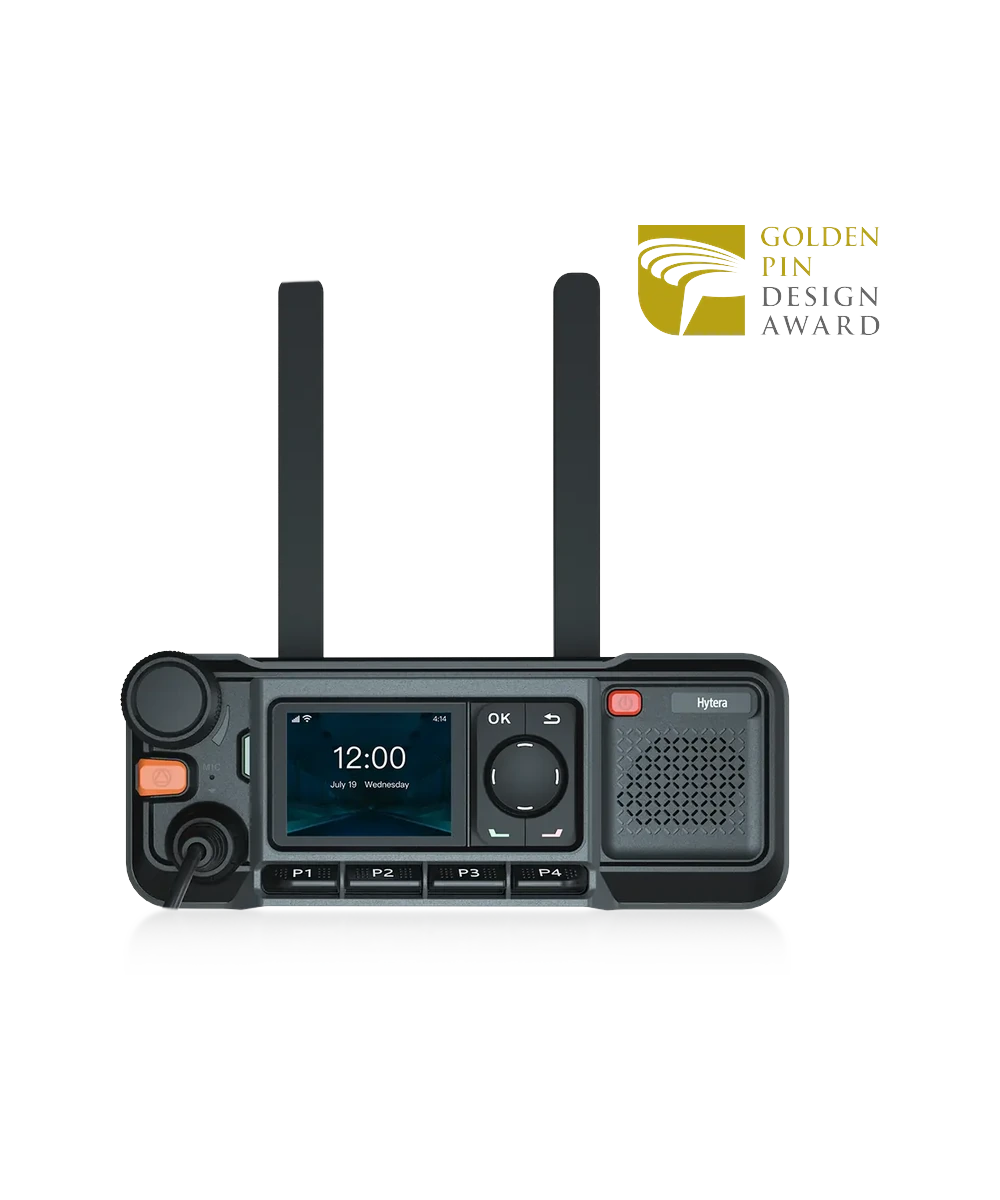
Hytera MNC360 PoC Mobile Radio
Hytera MNC360 PoC mobile radio for in-vehicle communication over cellular network, with Wi-Fi, positioning, two Micro-SIMs and integrated 4 W speaker.
The MNC360 is a PoC vehicular mobile radio. Communication uses an available cellular network and a compatible platform, with physical controls and dedicated audio for in-vehicle installation.
Vehicular PoC
Communication over available cellular network.
Integrated 4 W audio
Speaker with audio processing.
Integrated positioning
GPS, GLONASS, BDS and A-GPS.
Two Micro-SIMs
Depending on regional variant.
OVERVIEW
Meet the Hytera MNC360 PoC Mobile Radio
The Hytera MNC360 combines LTE, WCDMA, GSM, 2.4 GHz Wi-Fi, two Micro-SIMs and positioning via GPS, GLONASS, BDS and A-GPS.
- PoC mobile radio for vehicular use
- LTE, WCDMA and GSM depending on variant
- 2.4 GHz Wi-Fi, 802.11 b/g/n
- Integrated 4 W speaker
PoC MOBILE RADIO (4G/LTE)
Mobile and in-vehicle PoC communication
Operation depends on the adopted connectivity and PoC platform. Brazilian bands, homologation, chip and plan are not presumed on this page.
- GPS, GLONASS, BDS and A-GPS
- Android 7.1, Wi-Fi and Bluetooth 4.2
- Two Micro-SIMs
- 50.8 mm diagonal screen, 320 × 240
BORDERLESS COMMUNICATION
Made for long-haul fleets
Built for vehicle use: IP54 protection, operating range of −20 °C to +60 °C, and 4 W speaker with noise cancellation and howling suppression. 50.8 mm diagonal display and physical keys for in-cab use.
- IP54 protection (dust and splashes)
- Operation from −20 °C to +60 °C
- 50.8 mm diagonal display (320×240), physical keys
- Compact: 170 × 66 × 39.3 mm, ~300 g
Confirmed features of the MNC360
The equipment uses Android 7.1, 1 GB RAM and 8 GB storage, with support for microSD card up to 128 GB.
Mobile radio for vehicle installation
- Hytera MNC360 PoC mobile radio
- Cellular network according to variant and Wi-Fi
- Android 7.1, two Micro-SIM and IP54
- Project conditioned on cellular network, PoC platform and vehicle installation
Why buy from ABC Mais Telecom
Before quotation, the regional variant, platform, connectivity and power supply of the vehicle project must be confirmed.
Connectivity and two Micro-SIM
The 50.8 mm diagonal display has a resolution of 320 × 240 pixels. The equipment also offers 2.4 GHz Wi-Fi, Bluetooth 4.2 according to the brochure, and two Micro-SIM.
Integrated 4 W audio
The integrated 4 W speaker has distortion suppression, howling suppression and noise cancellation, according to the official page.
Specialized assistance
Specialized technical service and maintenance by a team specialized in radio communication, with close service in the ABC Paulista.
IP54 protection
The declared protection is IP54, with operation from −20 °C to +60 °C and storage from −40 °C to +85 °C.
Vehicle power supply
The nominal power supply is 13.6 V DC ±15%. The brochure also publishes an input range of 9 to 25 V DC for the equipment.
Compact format
The MNC360 measures 170 × 66 × 39.3 mm and weighs approximately 300 g.

How to specify the MNC360
The MNC360 is a PoC mobile radio developed for vehicle installation. Communication occurs over cellular networks and a push-to-talk platform. There is no fixed range in kilometers, as availability depends on coverage, SIM, data plan, selected network, and configured service. The project must consider routes, shadow areas, network switching, and the need to communicate with the dispatch center.
Vehicle construction of the MNC360
The equipment measures 170 by 66 by 39.3 mm and weighs about 300 g. The published power supply is 13.6 V with a tolerance of 15 percent. The MNC360 has two ports for LTE antennas, a connector for GPS antenna, Micro USB 2.0, 3.5 mm audio connector, and power input. The 10-pin aviation port connects the remote microphone. The position of the equipment, cable routing, and antenna installation must be planned for the vehicle.
System, display, and connectivity
Hytera states Android 7.1, 1 GB of RAM, and 8 GB of storage. The screen has a 51 mm diagonal. There are two Micro-SIM slots, Wi-Fi at 2.4 GHz, and optional NFC. Positioning includes GPS, GLONASS, BDS, and A-GPS. Alarms, maps, dispatch, and third-party applications depend on the adopted application and available integration. The page does not assume that every software feature is enabled in every configuration.
Audio and use while moving
The integrated 4 W speaker uses distortion suppression, noise suppression, and noise cancellation features. The two external LTE antennas were designed to improve reception in motion. The manufacturer also describes intelligent network selection. The practical result must be measured on real routes, especially in garages, rural areas, tunnels, docks, and regions with irregular coverage.
Protection and environment
The MNC360 has IP54 protection. The published operating temperature ranges from minus 20 to plus 60 degrees Celsius, while the storage range goes from minus 40 to plus 85 degrees Celsius. These ratings do not eliminate the need for correct choice of installation point, proper fastening, and protection of connectors against mechanical stress and undue exposure.
Checklist for quotation
- Map vehicles, routes, shifts, and areas with limited signal.
- Confirm regional variant, SIM, carrier, and data plan.
- Define PoC platform, groups, dispatch, and user policy.
- Plan power supply, bracket, antennas, and cable routing.
- Evaluate audio, positioning, and necessary integrations.
With this data, the MNC360 configuration can be analyzed without turning cellular coverage into a promise of range. The page keeps the physical specifications of the radio separate from the functions provided by the network or PoC platform.
Technical questions about the MNC360
Does the MNC360 replace a DMR radio?
The MNC360 is PoC and uses a data network. A DMR radio transmits on radio communication frequencies and can integrate its own repeaters. The choice between architectures depends on coverage, continuity, infrastructure control, latency, licensing, and operational routine. The MNC360 should be analyzed as a terminal of a PoC solution, not as an automatic substitute for any conventional system.
Is it correct to promise national coverage?
One should not turn the possible coverage of the cellular network into a promise of range. The terminal only communicates where the network, plan, and platform are available. Outdoor coverage does not guarantee the same performance in basements, tunnels, remote roads, or industrial areas. A test with real routes is more useful than an advertising distance.
What are the two Micro-SIM slots for?
The presence of two slots allows configuring network cards according to the variant and project. The page should not claim automatic switching, instant redundancy, or simultaneous use without proof of the delivered configuration. Carriers, priorities, and selection behavior need to be confirmed with the platform and applicable firmware.
How is positioning used?
GPS, GLONASS, BDS, and A-GPS provide location data to the equipment. Map visualization, history, alerts, and geofence rules depend on the application or dispatch system. Having GNSS receivers does not mean all these features will be active without integration, license, and usage policy.
Does the 4 W audio eliminate vehicle analysis?
The integrated 4 W speaker is a specification of the equipment, but engine noise, open cab, mounting position, and distance from the user influence intelligibility. The installation point must allow safe operation and adequate hearing without distracting the driver.
What data should be included in the project?
Record vehicle, available voltage, mounting location, route, network, SIM, data plan, platform, groups, dispatch center, positioning, and user policy. This sheet reduces ambiguities between MNC360 capability and service provided by external infrastructure.
How to validate before expansion?
A pilot deployment should cover representative routes, test group and individual calls, observe recovery after signal loss, and measure behavior in critical areas. It is also advisable to check audio, heating, power supply, and installation stability. Expansion should only occur after documenting the results.
Vehicle project validation roadmap
1. Route survey. List regular routes, schedules, stopping points, and locations where a communication failure would have the greatest impact. Include garages, docks, yards, roads, and indoor areas. This map guides coverage testing and avoids evaluating the MNC360 only at a favorable point.
2. Power and installation check. Confirm voltage, power point, applicable fuse, mounting, ventilation, and cable routing. The screen and controls must remain accessible without compromising driving. Antennas need a coherent position and connectors must not be under mechanical stress.
3. Network configuration. Document carrier, Micro-SIM cards, data plan, priority rules, and expected behavior when signal drops. Test transitions along the route. The presence of two slots does not replace a clear definition of how the solution will use each network.
4. Platform configuration. Register users, groups, permissions, dispatch center, and location features. Check which functions are part of the adopted license. Alarms, history, and integration with other systems should only appear in the proposal when they are actually configured.
5. Operational acceptance. Perform calls at high and low volume, record losses, observe recovery time, and confirm intelligibility with the vehicle in motion. The acceptance should indicate date, route, network, version, platform, and responsible parties. This way, future changes can be compared with a documented reference.
Maintenance record. After installation, keep a sheet with vehicle identification, antenna positions, power supply, MNC360 version, cards used, platform, and date of last test. Changes in carrier, plan, firmware, cabling, or mounting location can alter the observed result. When a failure occurs, compare network, power, audio, and application separately. This history helps distinguish physical defect, coverage unavailability, and configuration problem without replacing components by trial. Also record the route segment, time, perceived signal strength, and whether other vehicles showed the same symptom.
Technical Specifications
Cross-reference between the Hytera Brazil and Global pages and the official MNC360 brochure.
PoC
Communication over the cellular network.
IP54
Protection against dust and splashes.
4G/LTE
Depends on carrier coverage.
GPS
Satellite positioning.
Detailed data sheet
| Category | PoC mobile vehicle radio |
|---|---|
| System | Android 7.1 |
| Memory | 1 GB RAM + 8 GB ROM; microSD up to 128 GB |
| Display | 50.8 mm diagonal, 320 × 240 pixels |
| SIM | Dual Micro-SIM |
| Networks | LTE FDD/TDD, WCDMA and GSM, depending on variant |
| Wi-Fi | 2.4 GHz, 802.11 b/g/n |
| Bluetooth | 4.2, according to official brochure |
| Positioning | GPS, GLONASS, BDS and A-GPS |
| Audio | Integrated 4 W speaker |
| Power | 13.6 V DC ±15%; 9 to 25 V DC input in brochure |
| Protection | IP54 |
| Temperature | Operation from −20 °C to +60 °C |
| Dimensions | 170 × 66 × 39.3 mm |
| Weight | Approximately 300 g |
Explained features
See how the documented MNC360 features are organized into a PoC mobile solution.
PoC via 4G/LTE
PoC communication over available cellular network, subject to regional variant and configured platform.
Available connectivity
IP54 protection and operating range from −20 °C to +60 °C.
Integrated GPS
Android 7.1, dual Micro-SIM and support for third-party applications. The platform must be defined in the project.
Android 7.1 + apps
Positioning by GPS, GLONASS, BDS and A-GPS. Data usage depends on the integrated application.
Dual micro-SIM
Integrated 4 W speaker with audio processing features published by Hytera.
IP54 robustness
Nominal power supply of 13.6 V DC ±15%, with input range from 9 to 25 V DC published in the brochure.
Connectivity and features
PoC operation depends on the cellular or Wi-Fi network and the configured platform.
Audio and productivity
The MNC360 combines two external LTE antennas, two Micro-SIM, 2.4 GHz Wi-Fi and positioning by GPS, GLONASS, BDS and A-GPS.
Durability
The integrated 4 W speaker combines distortion suppression, noise suppression and noise cancellation.
Technical documents
Consult the official MNC360 documentation and confirm the regional variant and platform before requesting a quote.
Documented features of the MNC360


The sectors below are cited in the official Hytera material. The final composition depends on the network, installation and platform adopted.
Applications cited by Hytera
The MNC360 was designed for in-vehicle communication and operations that use cellular network.
Segments served
Logistics
Logistics: in-vehicle mobile communication, conditioned to available connectivity.
Carrying
Transportation: PoC vehicle terminal with integrated audio and physical controls.
Security
Security: communication via compatible platform and positioning features.
Ambulance and emergency
Ambulance and emergency: in-vehicle use cited by Hytera, according to project and available networks.
Mining
Mining: application cited in official material, subject to connectivity planning.
Use scenarios
Field services
Vehicle installation (12 V, range 9 to 25 V), with 2 LTE antenna ports, GPS antenna and external speaker.
Clear voice with noise cancellation
4 W speaker with noise cancellation and IP54 protection; the result depends on noise and cabin installation.
Network and platform
Vehicle PoC radio with Android 7.1, integrated positioning, two Micro-SIM, 50.8 mm diagonal screen, 4 W speaker and IP54 protection. Communication depends on connectivity and the adopted platform.
Compatible accessories
Check the details of each accessory to confirm its function and usage conditions with this equipment.
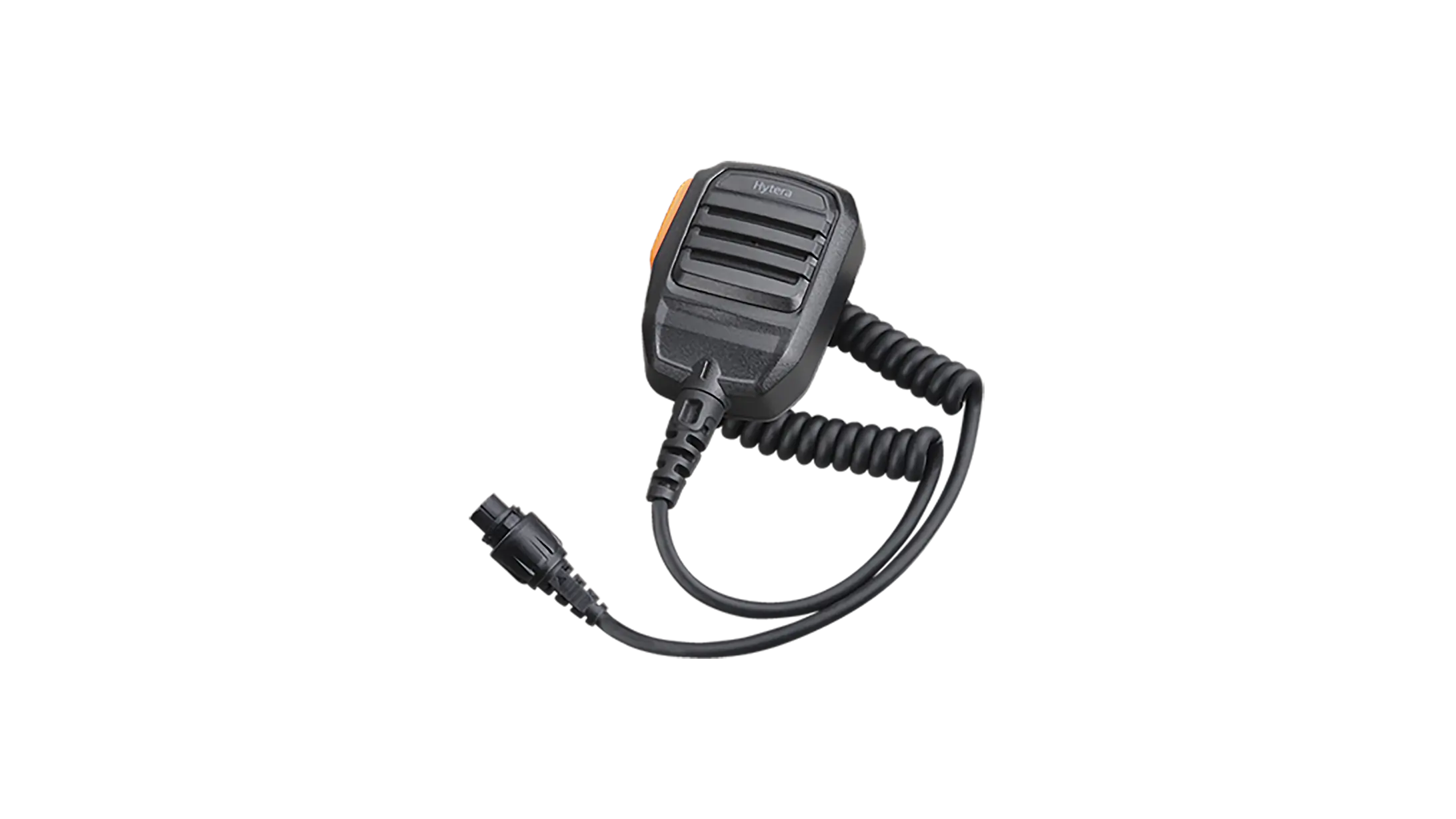
IP54 Hand Microphone
Palm microphone with PTT key, officially related to the MNC360. Does not have an emergency key; confirm vehicle mounting. Code SM16A1.
Check the details of each accessory to confirm its function and usage conditions with this equipment.
Request a quote
Fill in the fields below. ABC replies by email and WhatsApp with pricing on request, lead time and advice for your case. No commitment.
Loading accessories…
Response by email and WhatsApp. No obligation · price on request. We also rent: in rentals, Anatel frequency licensing is already included by ABC Mais Telecom.
Frequently asked questions
Is the MNC360 DMR or PoC?
The MNC360 is a PoC mobile radio. It uses cellular networks and a compatible platform, not conventional DMR channels.
On which networks does the MNC360 operate?
Communication occurs via LTE, WCDMA or GSM depending on the variant, as well as 2.4 GHz Wi-Fi.
Does the MNC360 have two Micro-SIMs?
The model has two Micro-SIMs and supports LTE FDD/TDD, WCDMA, GSM and Wi-Fi 802.11 b/g/n.
What is the range of the MNC360?
Operation depends on the available cellular or Wi-Fi network and the configured PoC platform. Hytera does not publish a fixed range.
What is the equipment's protection rating?
The published protection rating for the MNC360 is IP54.
Does the MNC360 have a screen and positioning?
The equipment has a 50.8 mm diagonal screen and positioning via GPS, GLONASS, BDS and A-GPS.
Is the MNC360 vehicle-mounted?
Yes. It is a mobile radio designed for in-vehicle communication and vehicle power supply.
What needs to be confirmed before the quote?
The page presents only the equipment and features published in the current official source.
