
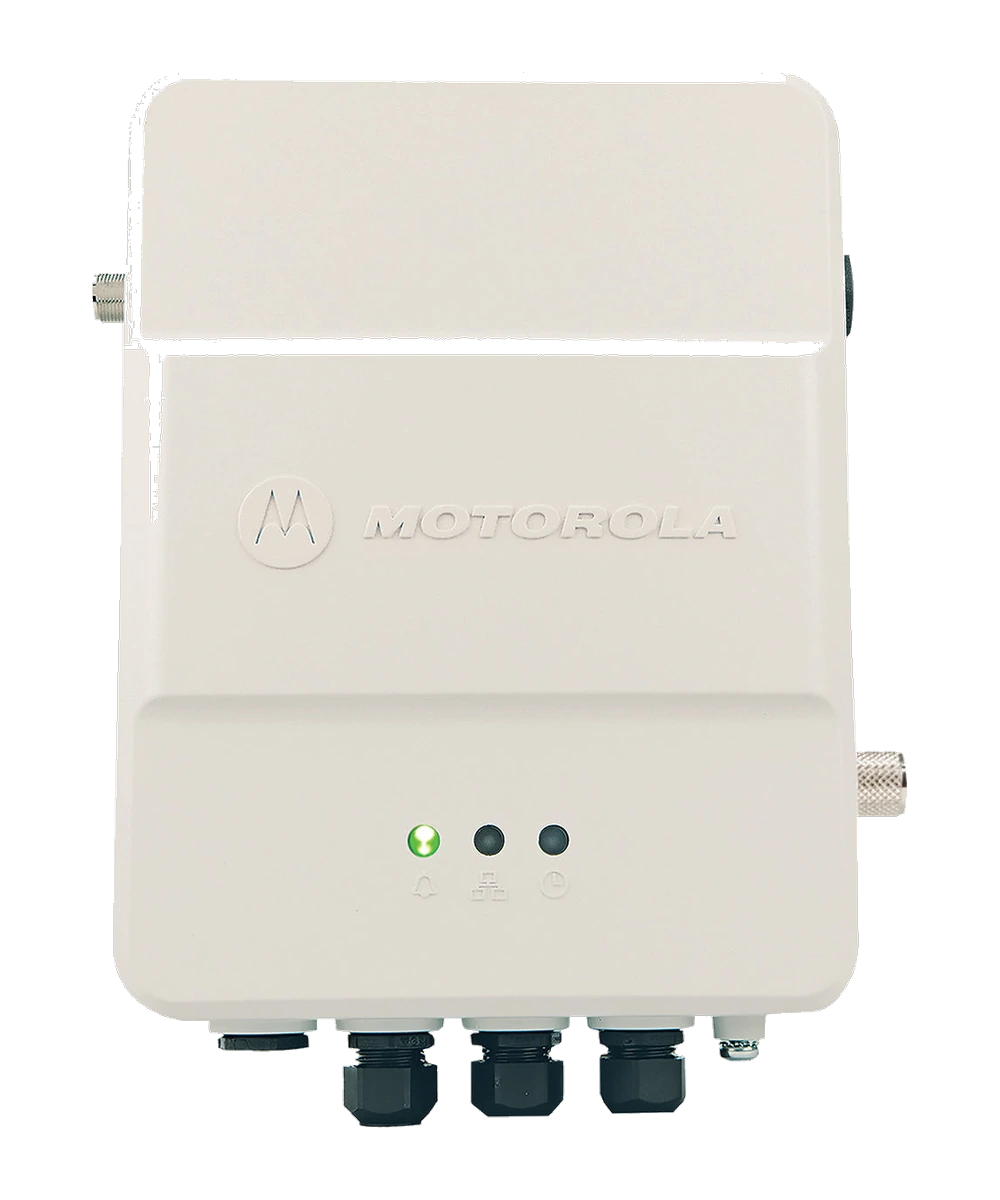
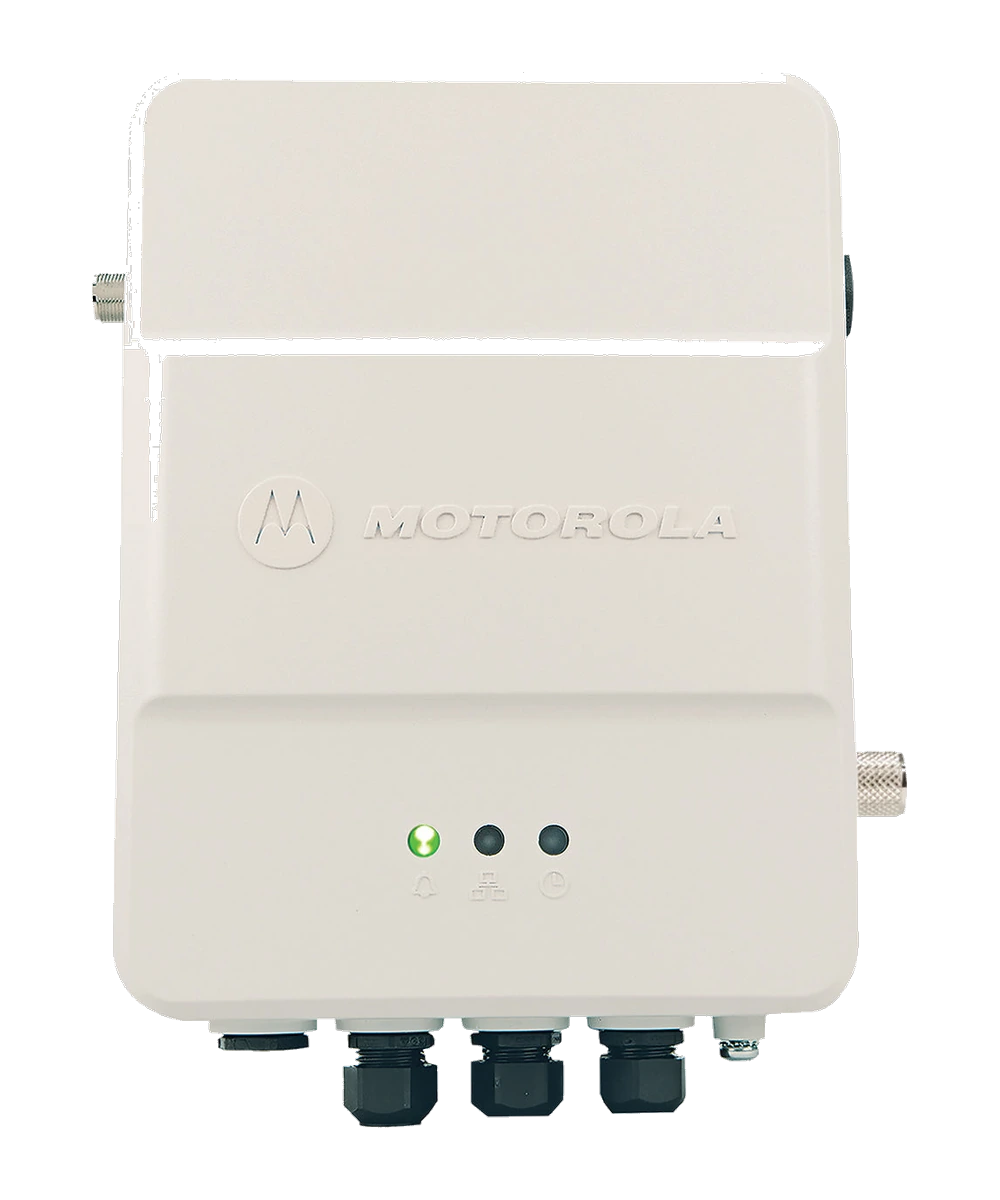
Motorola Connect Plus System
Connect Plus is a discontinued multi-site MOTOTRBO architecture. This page guides assessment of the installed base, operational continuity and migration planning.
Connect Plus interconnected MOTOTRBO sites over an IP network, with trunking and roaming on compatible radios. As it is a discontinued solution, new requirements should be assessed alongside migration planning. Parts, licenses, compatibility and services for existing installations depend on analysis and availability.
Multi-site
Connects repeaters at multiple sites into a single system over an IP network.
Dynamic trunking
Distributes available channels among groups, increasing spectrum use efficiency.
Extended coverage
Automatic roaming: the radio changes site as the user moves.
Voice and data
Digital voice, text messages and MOTOTRBO application data in the same system.
OVERVIEW
Explore the Motorola Connect Plus System
Legacy MOTOTRBO multi-site trunking architecture. For an installed base, assessment considers site controllers, repeaters, radios, versions and the IP network before defining maintenance or migration.
- MOTOTRBO multi-site IP trunking system
- Interconnects repeaters at multiple sites over an IP network
- Automatic roaming between sites
- Integrated voice, data, GPS and text messages
MULTI-SITE TRUNKING SYSTEM
Integrated communication between multiple sites, with voice and data
Connect Plus connects repeaters at different sites over an IP network: the user’s radio changes site automatically as they move, and the call is routed to the correct location without manual intervention.
- All, group and private calls
- Text messages and MOTOTRBO application data
- Radio monitoring and remote control
ARCHITECTURE AND OPERATION
How Connect Plus works
Each site uses compatible repeaters and a site controller; site controllers are interconnected over IP to manage calls and roaming. Centralized dispatch and integrations use their own components, interfaces and licenses when included in the configuration.
- Site controllers interconnected over an IP network
- Legacy base expansion subject to compatibility and availability
- Architecture sized for each project, from simple to advanced
- Regulatory requirements applicable to the project and responsibilities defined in the proposal
How can you assess your Connect Plus base with ABC?
The first step is to inventory controllers, repeaters, radios, versions and operational needs. Technical analysis guides installed base continuity and migration; scope, parts, licenses and services are confirmed in the proposal.
The multi-site trunking system in the MOTOTRBO line
- Multi-site trunking system in the MOTOTRBO line
- Extended coverage through an IP network between sites
- Integrated voice and data for large fleets
- Installed base technical assessment and migration planning
Plan the continuity of your operation
Connect Plus is discontinued and should not be treated as the default choice for a new deployment. Assessing the installed base identifies dependencies, obsolescence risks and migration steps, without assuming universal equipment reuse or license availability.
Installed base continuity
Ask about the feasibility of servicing the existing Connect Plus base. There is no promise of available new systems, parts or licenses; each requirement depends on technical analysis and a proposal.
Fleet configuration
The configuration of the existing fleet depends on models, versions, licenses and network conditions. Changes and testing must be defined in a technical plan for the installed base.
Specialized assistance
Technical support and maintenance provided by a team specializing in radio communication, with local service in the ABC Paulista region.
Project regulatory compliance
Radio frequency and station regulatory requirements must be checked for the project. Equipment certification does not replace other applicable requirements. Service scope and responsibilities are defined in the proposal.
Support and SLA
Support, maintenance and any service levels (SLA) are defined according to the installed base and the contract. They are not automatically included in the system presentation.
Warranty upon consultation
Warranty periods and coverage depend on the equipment, its condition and the proposal terms. Also confirm the scope of support and maintenance.
Technical Specifications
Historical technical reference for the Connect Plus architecture. Installation capacity and features depend on the existing version, configuration and licenses; the solution is discontinued.
Multi-site
IP network between sites
Trunking
MOTOTRBO
Voice and data
GPS and messaging
Scalable
Assessment and migration
Detailed technical data sheet
Historical MOTOTRBO multi-site trunking architecture. Each site uses a compatible controller and repeaters; controllers interconnect over an IP network. Voice, messaging, location and dispatch depend on the installation’s terminals, applications, interfaces and licenses. Capacity and redundancy vary by version and project. Connect Plus is discontinued; support and migration require analysis of the existing base.
Features explained
Each Connect Plus feature has a practical effect on your fleet’s operation. See what each element of the architecture means in day-to-day use.
Multi-site trunking
The system distributes available channels among each site’s talkgroups, increasing spectrum use efficiency in operations with many groups.
IP network between sites
Repeaters at each site connect over an IP network (dedicated data or VPN), allowing distant locations to be part of the same system.
Automatic roaming
The radio changes site automatically as the user moves, without having to change channels manually.
Centralized dispatch
Centralized dispatch depends on a console, gateway, interfaces and licenses compatible with the installation. It is not a feature automatically included in every Connect Plus base.
Integrated voice and data
Digital voice, text messages and MOTOTRBO application data in the same system, without relying on a cellular operator network.
Historical expansion and migration
The architecture provided for expansion by sites and channels. Today, as it is discontinued, any change depends on availability and compatibility, with assessment of migration to a current solution.
System connectivity and features
MOTOTRBO trunking system with an IP network between sites, digital voice, text messages and application data.
Fleet management and productivity
Management features: all, group and private calls, remote monitoring and remote activation/deactivation of lost radios. Available features vary according to the license and package defined in the project.
Network availability and planning
The Connect Plus base uses site controllers interconnected over IP. Redundancy, backup power and behavior during failures depend on the existing configuration and must be examined in the continuity plan.
Technical documents
Consult the official documentation for the Motorola Connect Plus System (MOTOTRBO line) with ABC Mais Telecom: technical material directly from Motorola Solutions, included in the system project.
Applications
Connect Plus was used in distributed operations with large fleets. The scenarios below provide context for the legacy architecture; they do not represent a guaranteed offer of new deployments.
A trunking system for large-scale, multi-site operations
From industrial plants to logistics operations with multiple facilities, Connect Plus integrates voice, data, GPS and text messages into a single system, with coverage extended through multiple sites connected over IP.
Sectors served
Industry and large plants
Multiple buildings and areas of an industrial plant covered by a single system, with automatic roaming between sites.
Logistics and port operations
Distributed yards, warehouses and loading areas, with integrated communication between the teams in each area.
Campuses and large facilities
Universities, hospitals and complexes with multiple buildings, connected in a single communication system.
Mining and oil and gas
Operations covering large geographical areas, with multiple sites connected over a dedicated IP network.
Large-scale property security
Security teams at multiple facilities or plants, with centralized dispatch and remote monitoring.
Large fleets
Fleets distributed across multiple bases or regions, with continuous communication between them.
Use scenarios
Government and utilities
Public agencies and utility providers operating in multiple municipalities or regions.
Large-scale construction
Extensive construction sites or multiple work fronts covered by a single system.
Events and large temporary operations
In temporary operations still using Connect Plus, continuity depends on the existing infrastructure and availability. A current solution should be evaluated for a new requirement.
Project components
Radios, repeaters, antennas, power supplies, licenses and integrations require confirmation of model, version and compatibility with Connect Plus. The components are defined in the proposal.
Request a quote
Fill in the fields below. ABC replies by email and WhatsApp with pricing upon request, lead time and guidance for your situation. No obligation.
Response by email and WhatsApp. No obligation · price on request. We also rent: in rentals, Anatel frequency licensing is already included by ABC Mais Telecom.
Frequently asked questions
What is the Motorola Connect Plus System?
Connect Plus is a legacy MOTOTRBO multi-site trunking architecture with site controllers linked over IP. It is discontinued; this page covers the installed base and migration planning.
What is the difference between Connect Plus, IP Site Connect and Capacity Plus?
IP Site Connect extends coverage without trunking; Capacity Plus shares channels through trunking in compatible single-site or multi-site configurations. Connect Plus belongs to the discontinued legacy portfolio and should not be presented as a current deployment recommendation.
When does a trunked system make sense?
Trunking makes sense when an operation has many talkgroups competing for a few available channels: the system automatically allocates free channels among groups, reducing waiting and improving spectrum efficiency.
How many sites and users does the system support?
Historical limits depend on the version and configuration. For an existing installation, controllers, repeaters, radios, licenses and actual capacity must be checked before proposing changes.
How should migration from an installed Connect Plus system be planned?
Because Connect Plus is discontinued, planning should start with an inventory of the installed base and compare current solutions. Reuse of radios, repeaters and licenses is not automatic: it depends on models, versions, architecture and availability.
How does Anatel licensing work for the system?
Radio frequency and station regulatory requirements must be checked for the project. Equipment certification does not replace other applicable requirements. Service scope and responsibilities are defined in the proposal.
Does the system provide voice, data and GPS?
Yes. Connect Plus integrates digital voice, text messages and MOTOTRBO application data (such as GPS/location) in the same system, without relying on a mobile operator’s network.
Are equipment and licenses available for an installed Connect Plus system?
Availability must be checked. Discontinuation means that new equipment, licenses or expansions cannot be assumed to be available; the assessment should include continuity and migration alternatives.
How should changes to the existing installation be assessed?
The assessment should inventory site controllers, repeaters, the IP network, radios and licenses, followed by a configuration and testing plan. Required services and components depend on the proposal and availability.
When should a current solution be considered?
When requirements involve new areas, more users, features or replacement of legacy components, compare operational needs with current solutions. Costs, compatibility and transition must be assessed for each project.
What is Connect Plus coverage?
Coverage depends on the number of installed sites and the distance between them: each site expands the system’s coverage area, and radios roam automatically between sites as users move. The final coverage area is defined in the project, on request.
