
Two-way radios: VHF, UHF, analog and digital
Radio communication guide
Two-way radios allow voice to be transmitted and received through the same equipment. For a business, the choice goes beyond VHF or UHF: technology, coverage, channels, infrastructure and routines need to work together.
How does a two-way radio work?
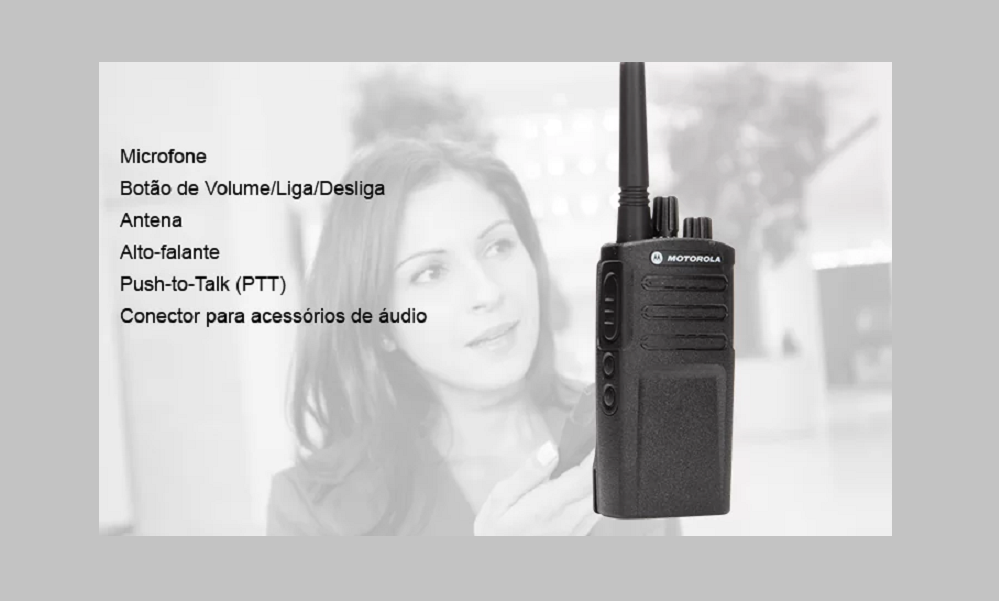
The user presses PTT to transmit and releases it to listen. This direct interaction reduces steps in activities where making a phone call, unlocking a screen or looking for a contact delays the response. As only one person occupies the channel at a time in a conventional conversation, short messages and acknowledgment are part of training.
Radios can operate directly with each other or through infrastructure such as repeaters. A network can also separate groups, prioritize calls and integrate locations, depending on the technology and project. The device is only part of the system.
VHF or UHF: what is the practical difference?
| Criterion | VHF | UHF |
|---|---|---|
| Typical professional band | 136 to 174 MHz in several models. | Bands near 400 to 470 MHz in several models. |
| Scenario to investigate | Open and rural areas may favor evaluation. | Urban and indoor environments often lead to a UHF assessment. |
| Compatibility | Does not communicate directly with a UHF radio. | Does not communicate directly with a VHF radio. |
| Correct decision | Depends on testing, frequency authorization, antennas and the existing network. | |
These trends do not replace a study. Two neighboring buildings may behave differently because of basements, elevators, metal warehouses or equipment that generates electromagnetic noise.
Analog and digital serve different needs
Analog is familiar and may remain suitable for simple networks. Digital DMR adds features such as private and group calls, identification, better channel organization and, on compatible equipment, safety and management functions.
Migration need not mean replacing the entire fleet on the same day. Some radios work in both analog and digital modes, allowing a transition to be planned. However, available features, licensing and compatibility vary by model and programming.
List models, bands, channels and accessories before choosing.
Define who needs to hear whom and which calls have priority.
Map blind spots, noise, outdoor areas and movement.
Consider programming, maintenance and replacement throughout the service life.
What to provide for a useful recommendation
- Number of simultaneous users and radios per shift.
- Approximate area, floors, basements and outdoor zones.
- Distance between facilities and need for communication between addresses.
- Noise level and hearing protection use.
- Need for emergency features, location or call recording.
- Operational duration: permanent purchase or temporary rental.
With these answers, the consultant can compare portfolio models, indicate when a test is necessary and avoid a generic quote based only on power.
Frequently asked questions
Can a VHF radio communicate with a UHF radio?
Not directly. They operate on different bands, and compatibility must exist across the whole network.
Does digital always reach farther?
Not as a universal rule. Digital can maintain intelligible audio near the limit, but coverage still depends on the environment and project.
Does every business need a repeater?
No. It is considered when direct communication does not cover the area or when the architecture requires greater capacity and integration.
Is Anatel authorization required?
Professional radios in licensed bands normally require network regulatory compliance in addition to equipment certification. The applicable classification must be checked for each solution.
Two-way radios: checklist before requesting a quote
The two-way radios must be chosen based on the environment and routine, not just advertised power.
- ✓ Provide the area and obstacles to size the two-way radios.
- ✓ List the teams and groups that will use the two-way radios.
- ✓ Explain the noise, shifts and accessories expected for the two-way radios.
With this information, the two-way radios can be compared by coverage, operation and total cost.
Sources and references
Want to compare VHF, UHF, analog and digital in your environment?
Describe the area, team and existing fleet. ABC Mais Telecom helps turn this information into a clear recommendation.
